Draw a line from Miami to Bermuda, then to San Juan in Puerto Rico and back again. Inside that rough triangle of ocean, the story goes, ships and aircraft vanish without a trace. The Bermuda Triangle is one of the most famous mysteries in the world, but the real story is more interesting than the legend.
Quick facts
| Location | Western North Atlantic, between Miami, Bermuda and Puerto Rico |
| Rough size | About 1.3 million square kilometres |
| Name first used | 1964, in a magazine article by Vincent Gaddis |
| Most famous case | Flight 19, five US Navy bombers lost in 1945 |
| Official status | Not recognised as a special danger zone by the US Navy or Coast Guard |
How the legend started
The name Bermuda Triangle first appeared in 1964 in a pulp magazine. A decade later Charles Berlitz published a bestselling book that linked the disappearances to everything from Atlantis to alien abduction. The idea stuck, and the triangle became a fixture of documentaries and late night radio.
The famous cases
USS Cyclops, 1918
The US Navy collier Cyclops vanished with more than 300 people on board while sailing from Brazil to Baltimore. It remains the largest single loss of life in US Navy history not involving combat. No wreck has ever been found. Possible causes include structural failure, an overloaded cargo of manganese ore and a storm.
Flight 19, 1945
Five TBM Avenger torpedo bombers left Fort Lauderdale on a training flight. The lead pilot became convinced his compasses had failed and that the group was over the Gulf of Mexico. Radio messages show growing confusion. The planes eventually ran out of fuel and ditched. A Mariner flying boat sent to search for them also disappeared, most likely after an explosion that a passing ship reported seeing.
Star Tiger and Star Ariel, 1948 and 1949
Two British airliners of the same type were lost on routes near Bermuda within a year. Investigators could not determine the cause, which only added to the legend.
What the science says
Researchers have looked hard at the triangle, and the big finding is surprisingly dull: it is not more dangerous than other busy stretches of ocean. Insurance markets such as Lloyd's of London do not charge more to sail through it. Several natural factors explain why losses happen there at all:
- Heavy traffic. It is one of the busiest shipping and flight corridors on Earth, so more accidents happen simply because more vessels pass through.
- The Gulf Stream. This fast, warm current can carry debris far away quickly and stir up sudden rough water.
- Storms. The area sits in the path of Atlantic hurricanes and sees fast forming squalls.
- Deep water. The Puerto Rico Trench is more than 8,000 metres deep, so wreckage can sink beyond easy reach.
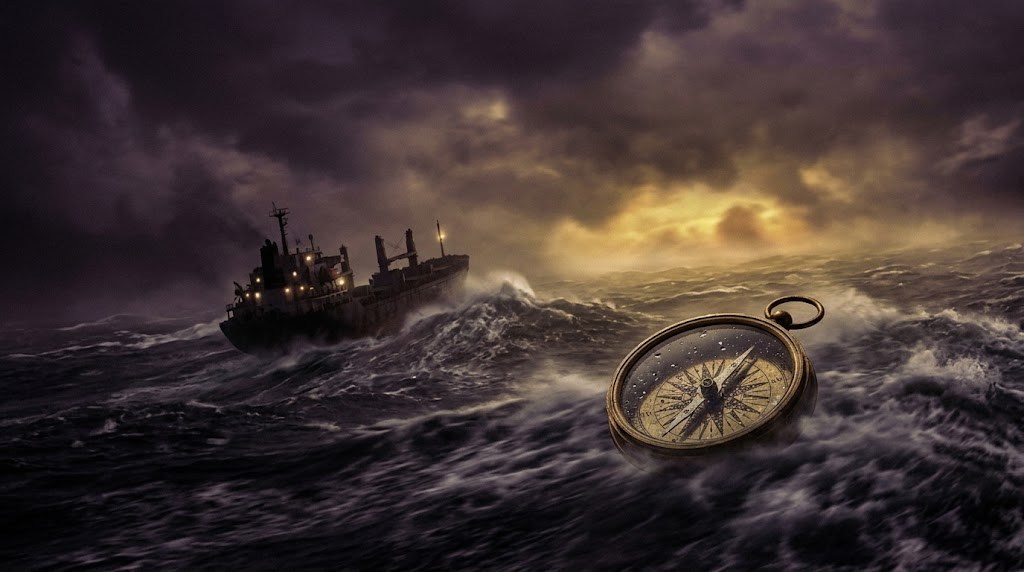
- Compass behaviour. In parts of the region magnetic north and true north line up, which can confuse navigators who forget to correct for it.
What about rogue waves and methane?
Two popular theories get a lot of attention. Rogue waves, single waves far taller than those around them, are real and can sink ships anywhere in the world's oceans. Methane gas bursts from the seabed have also been suggested as a way to make water less buoyant, but there is no evidence of large eruptions in the triangle in recent history. Neither theory is needed to explain the known cases.
So is the Bermuda Triangle real?
The place is real and so are the losses. What is not real is a mysterious force that makes it special. The triangle is a busy, stormy, deep piece of ocean, and its legend owes more to good storytelling than to bad luck.
Frequently asked questions
How many ships have disappeared in the Bermuda Triangle?
Popular books claim dozens of ships and planes, but many of the listed cases happened elsewhere or were never mysterious. There is no official count because authorities do not treat the area as unusual.
Is it safe to fly or sail through the Bermuda Triangle?
Yes. Thousands of flights and ships cross it safely every day.
Who named the Bermuda Triangle?
Writer Vincent Gaddis, in a 1964 magazine article.
Keep reading
Sources
- NOAA Ocean Service, "What is the Bermuda Triangle?"
- US Naval History and Heritage Command, records on USS Cyclops and Flight 19
- Lawrence David Kusche, The Bermuda Triangle Mystery: Solved (1975)