
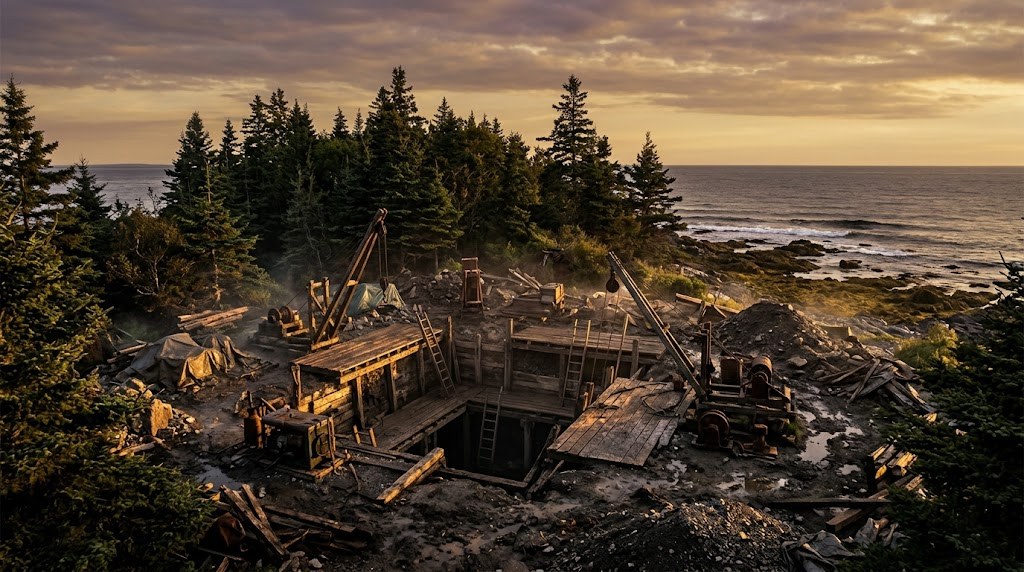
Oak Island is a small wooded island in Mahone Bay, Nova Scotia. It may also be the site of the longest running treasure hunt in history. Since 1795 people have dug, drilled and pumped in search of something buried there, and the hunt has even become a long running TV series. So what is in the Money Pit?
Quick facts
| Location | Mahone Bay, Nova Scotia, Canada |
| Size | About 57 hectares |
| Discovered | 1795, by teenager Daniel McGinnis according to tradition |
| Main feature | The Money Pit, a shaft that floods with seawater |
| Deaths | Six people have died in searches over the years |
How the story begins
According to the classic account, in 1795 a young man named Daniel McGinnis spotted a circular depression in the ground under an oak tree with an old block and tackle hanging from a branch. He and two friends started to dig and found a layer of flagstones, then layers of oak logs at regular intervals as they went down. They did not find treasure, but the legend of the Money Pit had begun.
The flooding pit
In the early 1800s a company reached a depth of about 27 metres. According to the stories, they found layers of charcoal, putty and coconut fibre, along with a stone carved with strange symbols. The next morning the shaft had filled with water. Every later attempt ran into the same problem. Searchers came to believe that the builders had dug flood tunnels from the beach to protect the treasure, an idea that made the pit seem even more deliberate and valuable.
The theories
- Pirate treasure. The oldest idea links the pit to Captain Kidd or Blackbeard, both rumoured to have buried loot along the Atlantic coast.
- Military payroll. Some suggest British or French forces hid funds there during the colonial wars of the 1700s.
- The Knights Templar. A popular modern theory says the Templars hid relics, even the Holy Grail, after fleeing Europe. There is no historical evidence for this.
- Lost manuscripts. One theory claims papers proving Francis Bacon wrote Shakespeare's plays are buried there.
- Nothing at all. Geologists point out that the island sits on limestone and gypsum, rocks that form natural sinkholes and caves linked to the sea, which would explain both the hollows and the flooding.
The modern hunt
Since 2014 brothers Rick and Marty Lagina and their team have searched the island for the History Channel series The Curse of Oak Island. Using modern drilling, sonar and dating methods, they have recovered coins, a lead cross, old wooden structures and other artefacts, some dating to centuries before 1795. These finds show people were active on the island long ago, but no treasure vault has been found.
Is there treasure on Oak Island?
After more than 230 years, the honest answer is that nobody knows. Many early stories were written down long after the events and may have grown with each retelling. The island certainly holds history. Whether it holds treasure is the question that keeps the drills turning.
Frequently asked questions
Has any treasure been found on Oak Island?
Small artefacts such as coins and metal objects, yes. A large treasure hoard, no.
Can you visit Oak Island?
The island is privately owned, but guided tours have been offered in summer. Check current details before travelling.
Why does the Money Pit flood?
Searchers believed in man made flood tunnels. Geologists think natural channels in the rock connect the shaft to the sea.
Keep reading
Sources
- Nova Scotia Archives, Oak Island records
- D'Arcy O'Connor, The Secret Treasure of Oak Island (2004)
- History Channel, The Curse of Oak Island