
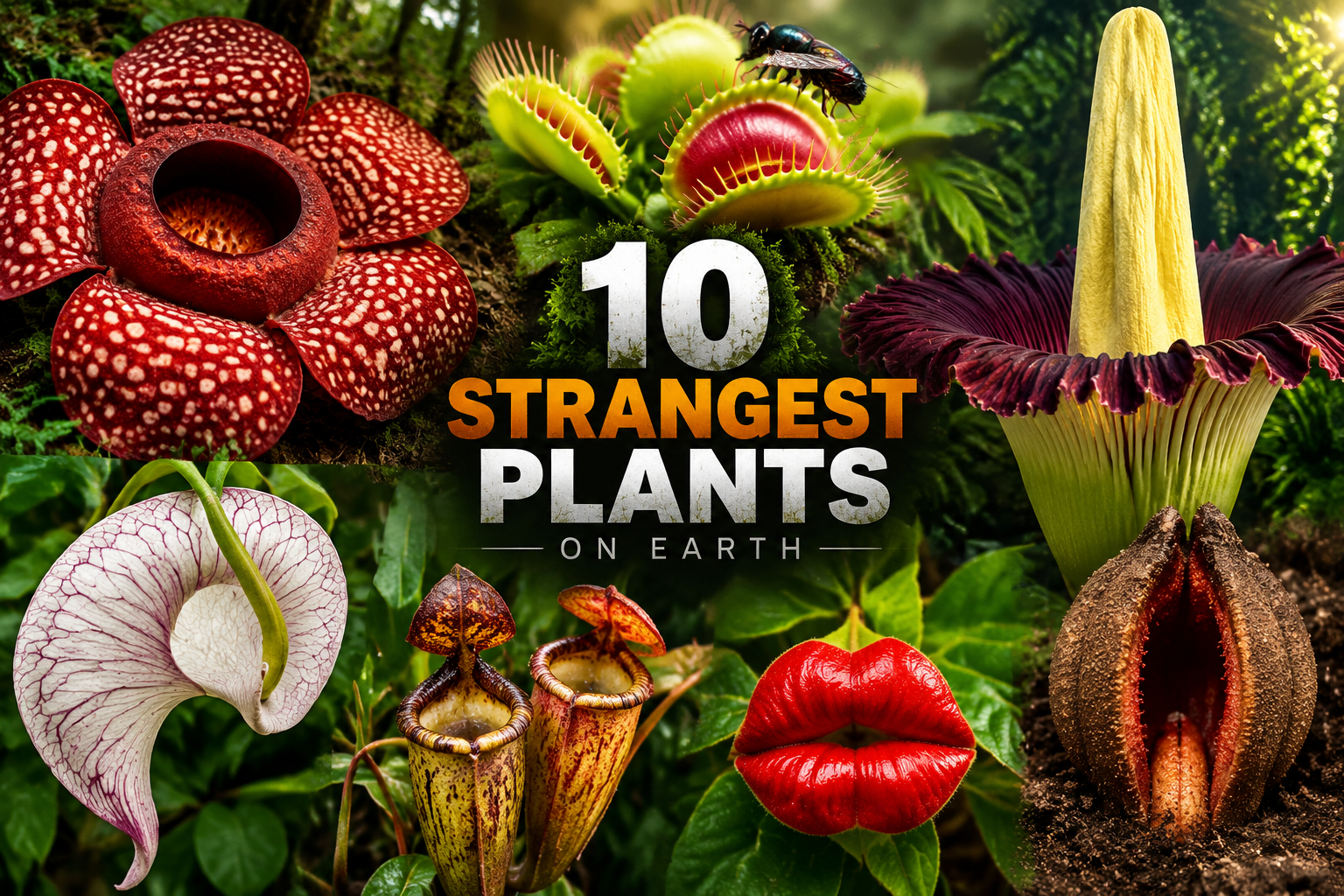
Nature has spent millions of years creating life forms that seem impossible to believe. Some plants grow beautiful flowers, some produce smells similar to dead animals, some trick insects into helping them reproduce, and others can trap and digest living creatures. The strangest part is that none of these plants come from fantasy movies or science fiction they exist right here on Earth. From a flower that looks like human lips to a plant capable of trapping small animals, these are some of the most unusual plants ever discovered. Welcome to The Hidden Secrets, where we explore the mysteries of nature that most people never see.
🎬 Prefer to watch instead of read? See all 10 of these bizarre plants come to life in our full video: The Strangest Plants on Earth The Hidden Secrets on YouTube.
What Are the Strangest Plants on Earth?
The strangest plants on Earth are species that developed unusual survival methods over millions of years of evolution. The most famous examples include the Venus Flytrap, Rafflesia arnoldii, the Titan Arum (corpse flower), the Giant Pitcher Plant, the Hooker’s Lips plant, and the Monkey Face Orchid. Some of these plants evolved bizarre shapes to attract pollinators, while others developed hunting abilities because they live in environments where nutrients are extremely difficult to find. Together, they prove that nature is far more creative than most people imagine. Here are 10 of the most bizarre plants found around the world, counting down to the strangest of them all.
10. Hooker’s Lips Plant (Psychotria elata)
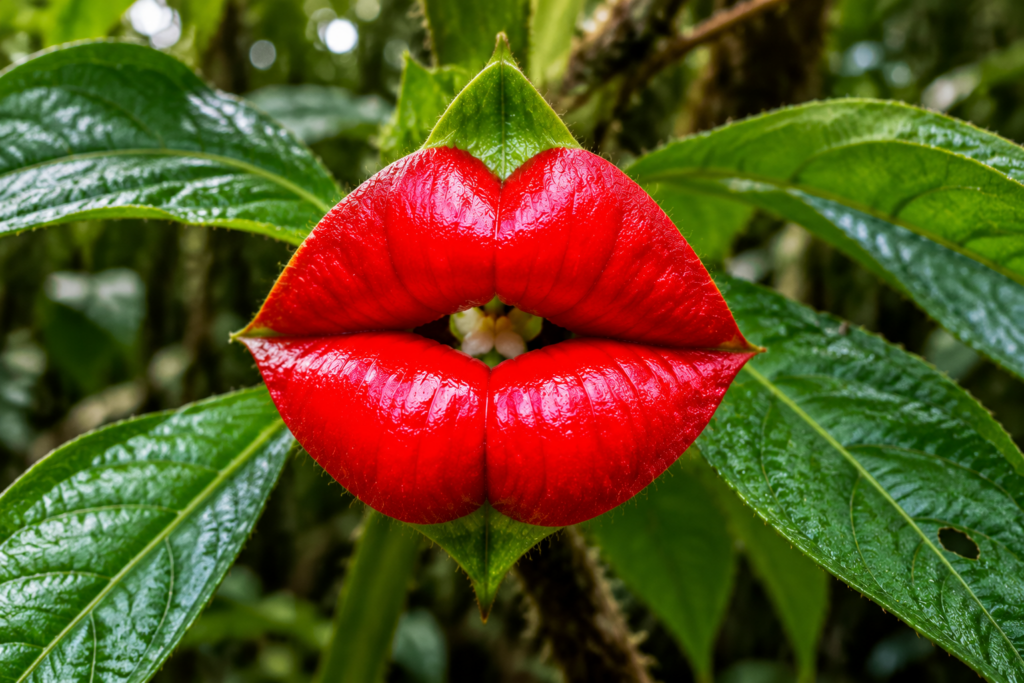
Imagine walking through a tropical rainforest and suddenly seeing a bright red pair of human-looking lips growing from a plant. That is exactly what makes the Hooker’s Lips plant one of the strangest plants on Earth. Native to the rainforests of Central and South America, this unusual species has become world-famous because of its incredible shape. However, the red “lips” are not actually the flower they are modified leaves called bracts, which appear before the real flowers open and help attract pollinators in the dark rainforest environment.
Once the plant blooms, small white flowers emerge from the center of the red structure. The appearance almost looks like nature created its own advertisement: the bright color acts like a natural signboard telling insects and hummingbirds that something important is nearby. According to the Smithsonian Tropical Research Institute, rainforest plants like Psychotria elata rely heavily on these visual signals to compete for pollinators, making the Hooker’s Lips plant a perfect example of how plants evolve creative ways to survive.
9. Monkey Face Orchid (Dracula simia)
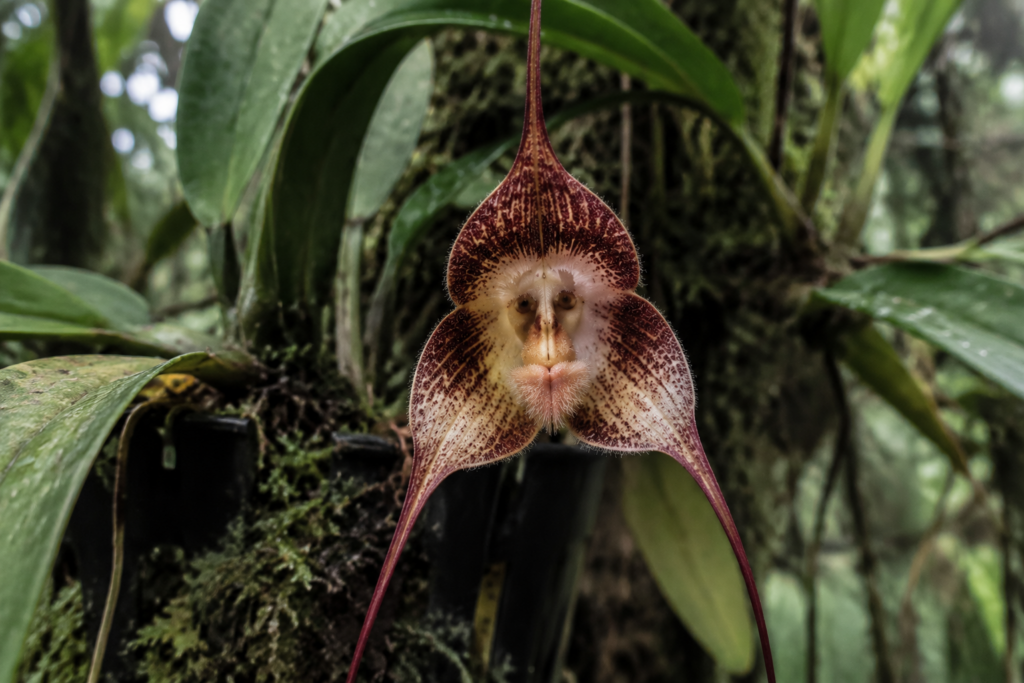
Some flowers look beautiful this one looks like it is watching you. The Monkey Face Orchid is one of the rarest plants in the world, and it appears to have a tiny monkey face hidden inside its petals, complete with what looks like two eyes, a nose, and a mouth. Its scientific name, Dracula simia, comes from two interesting details: “simia” means monkey, while “Dracula” refers to the flower’s unusual fang-like extensions that hang from its petals.
This orchid naturally grows in the cool, cloudy mountain forests of Ecuador and Peru at high elevations. Unlike many strange plants that use unpleasant smells to attract insects, the Monkey Face Orchid is reported to produce a pleasant fruity fragrance similar to ripe oranges. Nature somehow created a flower that looks like a monkey, has vampire-inspired features, and smells like fruit proof that evolution can produce designs that seem almost artistic.
8. Bee Orchid (Ophrys apifera)
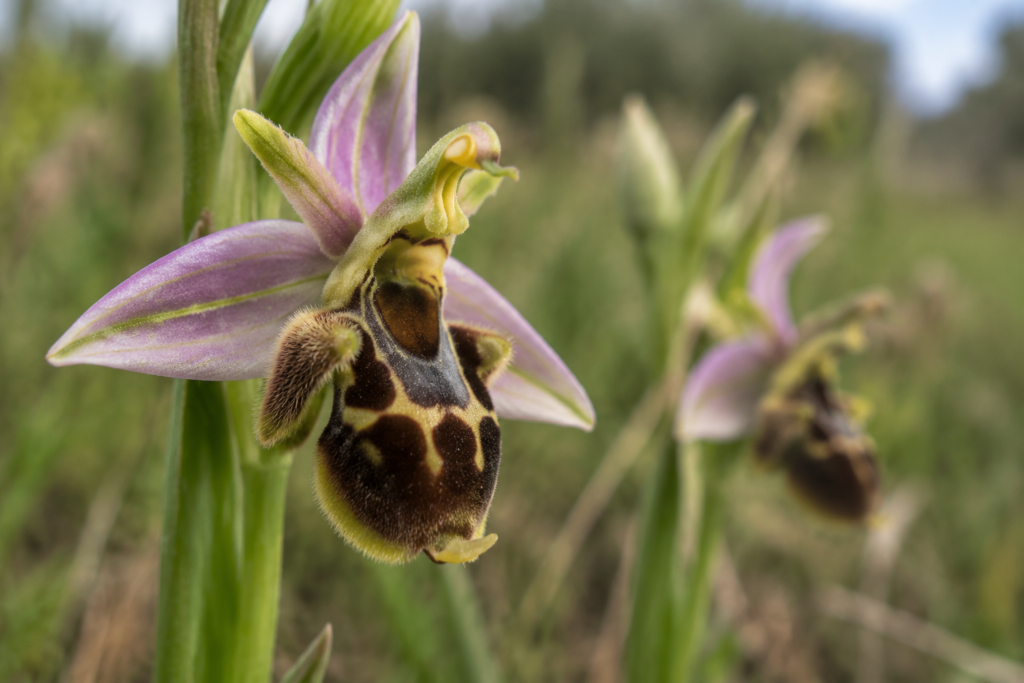
The Bee Orchid is one of nature’s greatest examples of deception. Instead of producing a simple attractive flower, this plant created a full biological illusion: its flower looks remarkably similar to a female bee, with shape, colors, texture, and even chemical signals designed to fool male bees. When a male bee spots the flower, he mistakes it for a potential mate, lands on the orchid, and attempts to reproduce only to discover he has been tricked.
During this process, pollen attaches to the bee’s body, and when the confused insect flies away and visits another orchid, he unknowingly helps the plant reproduce. The Bee Orchid never needs to offer a reward like nectar; it simply uses deception. Botanists at the Royal Botanic Gardens, Kew consider this strategy, called sexual mimicry, one of the clearest examples of how plants can manipulate animal behavior for their own survival.
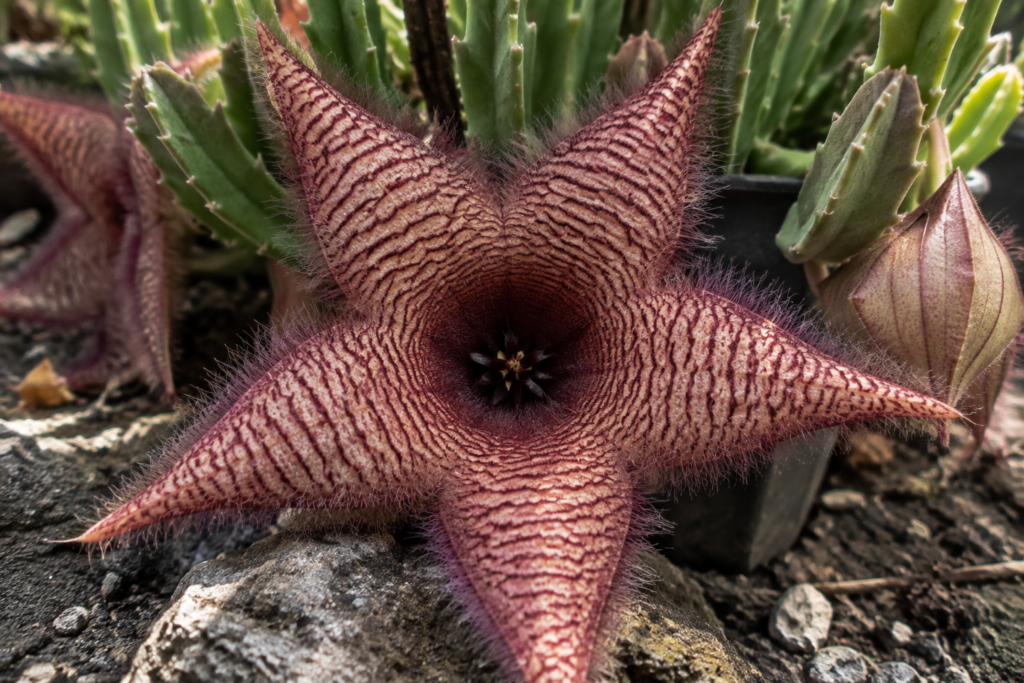
7. Starfish Flower (Stapelia gigantea)
At first glance, the Starfish Flower looks less like a plant and more like something that washed up from the ocean. Its massive five-pointed flower has a strange star-shaped appearance covered with wrinkles, tiny hairs, and unusual markings. But its appearance is not even the strangest thing about this plant the real mystery is its smell. Unlike most flowers that produce sweet scents to attract bees and butterflies, the Starfish Flower creates an odor similar to decaying meat.
The reason is simple: this plant is not interested in beautiful pollinators it wants flies. Flies naturally search for rotting organic material because that is where they find food and lay their eggs, and the Starfish Flower exploits this behavior perfectly. When flies approach the flower believing they have found a meal, they unknowingly carry pollen from one plant to another. From the fly’s perspective it is a huge mistake, but from the plant’s perspective it is a perfect survival strategy proof that nature does not always need beauty to succeed.
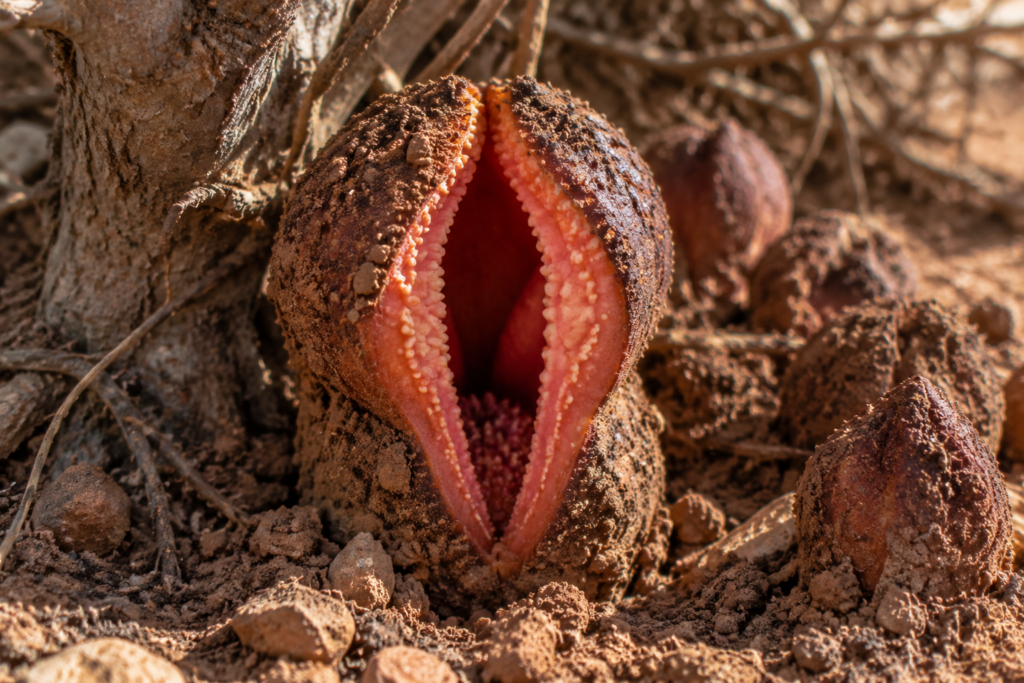
6. Hydnora Africana (Hydnora africana)
Hydnora africana might be one of the strangest plants ever discovered because it barely looks like a plant at all. For most of its life, this mysterious African species remains completely hidden underground, with no visible leaves, stems, or branches. It also cannot create energy through photosynthesis. Instead, Hydnora africana survives as a parasite, attaching itself to the roots of nearby Euphorbia plants and stealing the nutrients it needs.
Then, after spending most of its life underground, something shocking happens: a strange fleshy structure pushes through the soil and opens like an alien mouth. The flower releases a strong, unpleasant smell that attracts dung beetles, and special structures inside temporarily prevent the insects from leaving. The beetles move around, collect pollen, and are eventually released to carry it to another Hydnora flower. Strangest of all, this horror-movie-looking plant is not dangerous its fruit has traditionally been eaten by local people and animals, making it a genuine part of its natural ecosystem.
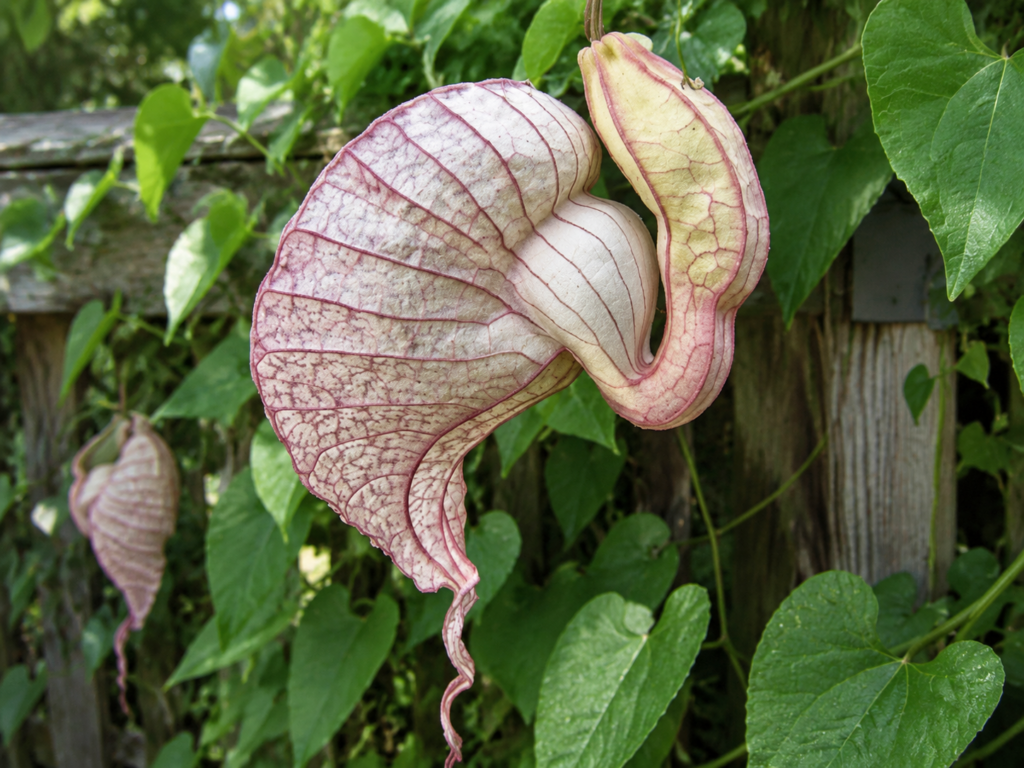
5. Pelican Flower (Aristolochia grandiflora)
The Pelican Flower looks like something designed by an alien civilization. Its enormous bloom forms a long, curved shape with a dramatic opening that resembles a strange creature’s mouth but this unusual design has a very specific purpose. The Pelican Flower operates a temporary insect trap: its strong smell lures flies deep inside the flower, where tiny downward-facing hairs make escape difficult.
Unlike carnivorous plants, however, the Pelican Flower is not trying to eat its visitors the insects are simply being used as transportation. Flies arriving with pollen from other flowers deposit it inside, the plant then dusts them with its own pollen, and once the job is done the hairs weaken and the flies are released to continue their journey. In a strange way, this plant created its own delivery system, convincing insects to become part of its reproduction process. Nature essentially built an entire airport inside a single flower.
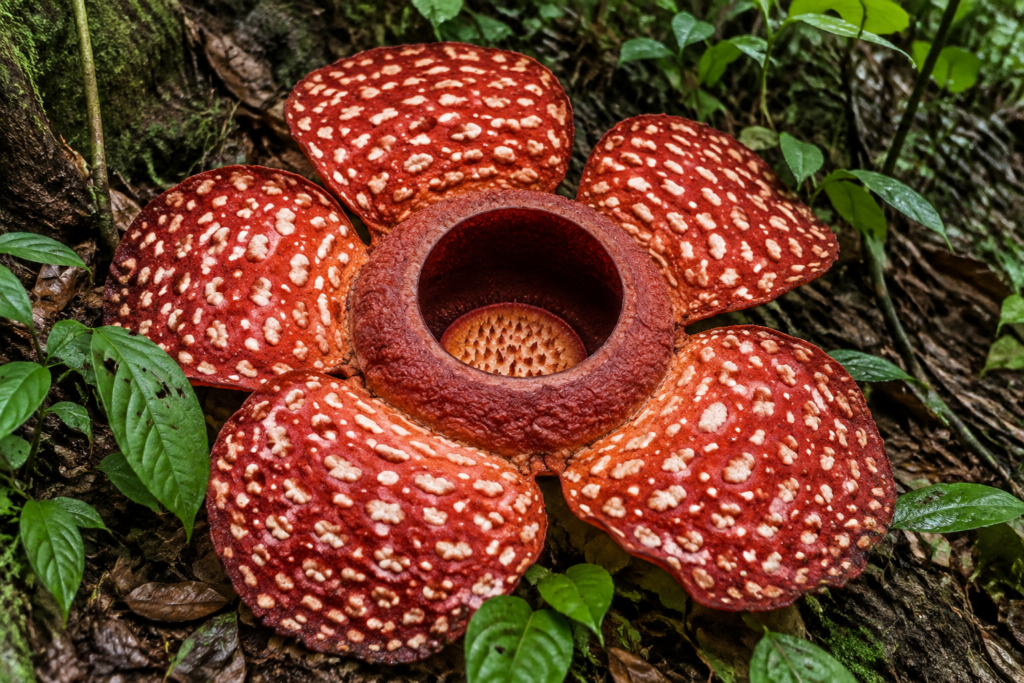
4. Rafflesia (Rafflesia arnoldii)
Rafflesia is one of the most famous strange plants on Earth for a simple reason: it produces the largest individual flower ever discovered, with some blooms growing more than three feet wide. Imagine walking through a Southeast Asian rainforest and finding a flower larger than a human head. But the giant size is only part of the mystery for most of its life, Rafflesia is almost invisible, with no normal leaves, no traditional stem, and no growth above the ground. Instead, it lives entirely inside a host vine as a parasite, stealing water and nutrients until it is ready to bloom.
When the moment finally arrives, a small bud appears and slowly develops into a massive reddish flower but instead of attracting bees and butterflies, Rafflesia smells like rotting flesh, drawing in the flies that pollinate it. After months of hidden preparation, the enormous flower opens for only a few days before collapsing. Years of invisible growth for just days of existence that is what makes Rafflesia, described in detail by Britannica, one of nature’s greatest secrets.
3. Titan Arum (Amorphophallus titanum)
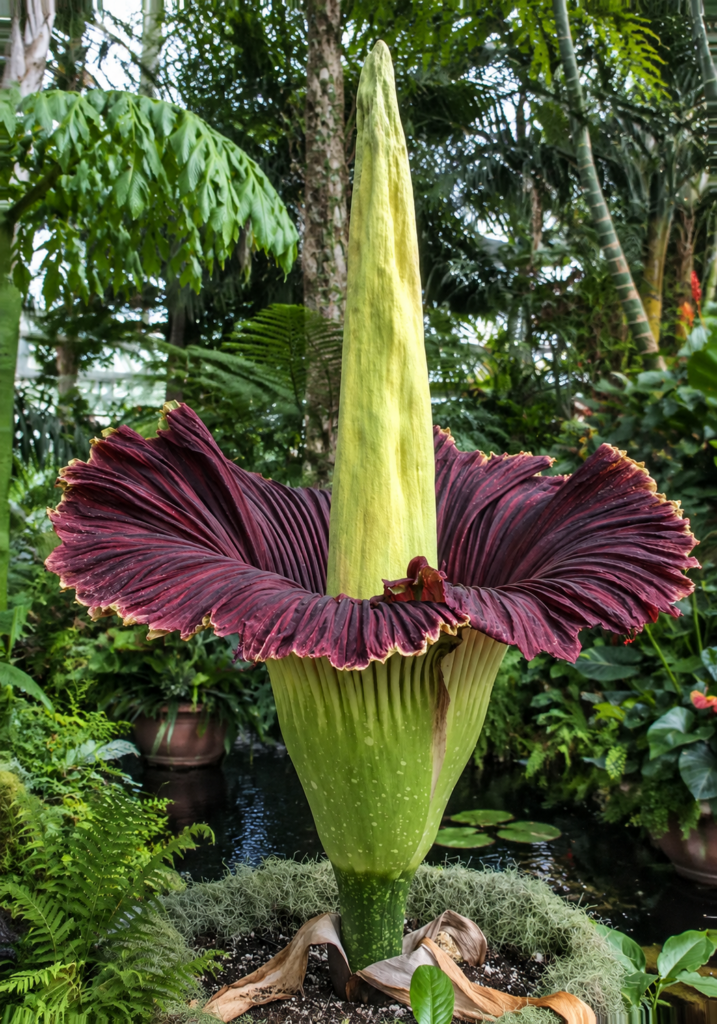
Known worldwide as the corpse flower, the Titan Arum is one of the most dramatic plants on Earth. This incredible species can grow more than ten feet tall, and when one blooms in a botanical garden, people travel long distances just to witness it. But the experience is not only visual it is also about the smell. The Titan Arum produces an extremely powerful odor compared to rotting meat, designed for one purpose: to attract the flies and carrion beetles that pollinate it. Even more impressive, the plant generates heat from its central column, which helps spread the smell farther into the surrounding rainforest, while the dark red colors inside the bloom strengthen the illusion of decaying flesh.
There is another hidden secret as well: what looks like one giant flower is actually a structure containing thousands of tiny flowers hidden at its base. According to the United States Botanic Garden, the Titan Arum can spend years storing energy in its massive underground corm before finally blooming and then, after only a few days, the incredible display collapses. Years of preparation for a few days of chaos: that is the strange beauty of the corpse flower.
2. Giant Pitcher Plant (Nepenthes rajah)
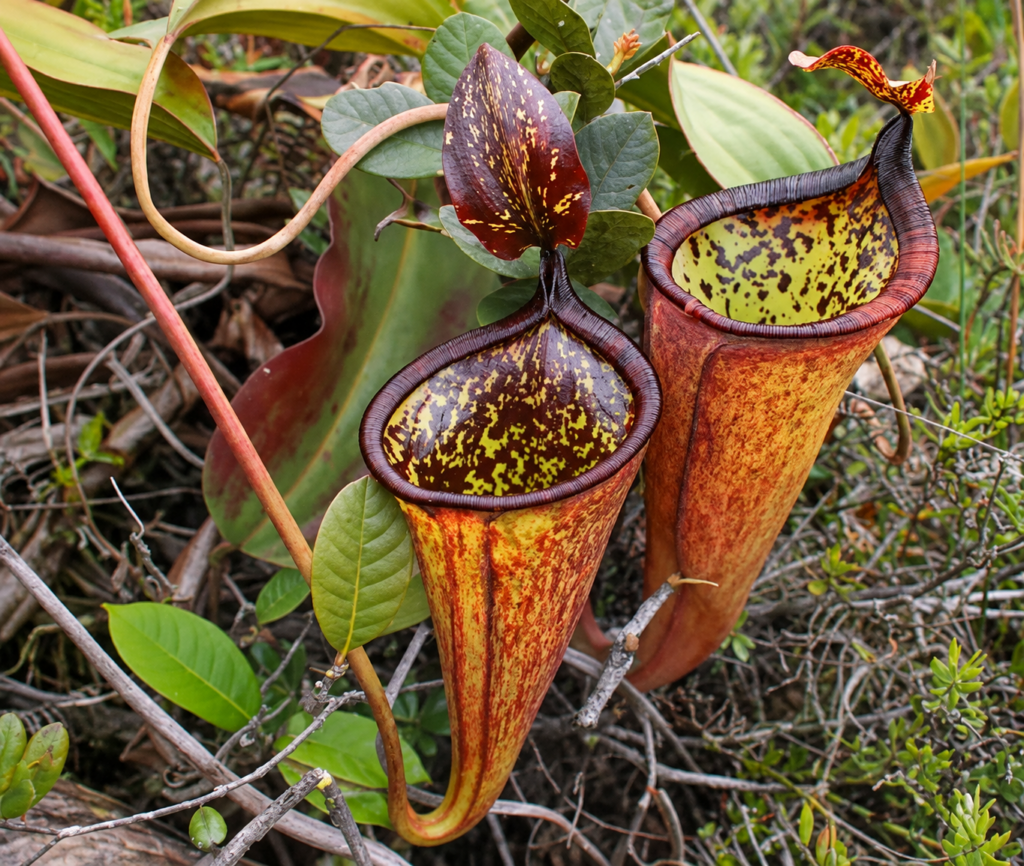
When people think about strange plants, most imagine unusual shapes or strange smells but the Giant Pitcher Plant takes things to another level, because this plant hunts. Nepenthes rajah is one of the largest carnivorous plants on Earth, growing naturally in the mountain regions of Borneo where the soil is extremely poor in nutrients. Because the environment cannot provide enough minerals, the plant evolved a shocking solution: it became a predator. It creates giant pitcher-shaped traps filled with digestive liquid, with slippery rims that send insects tumbling inside, where they are broken down and absorbed as nutrients. Researchers have even discovered small rodents inside some of the largest pitchers.
The relationship between this plant and animals is even more fascinating than its hunting, however. Some giant pitcher plants have developed genuine partnerships with small mammals such as mountain tree shrews: the animals climb onto the plant to feed on its nectar, and while eating, they leave droppings directly into the pitcher, providing valuable nitrogen for the plant. So this giant carnivorous species is not only a hunter it is also part of a strange natural partnership, a plant that eats animals while simultaneously serving as a feeding station for them. Nature clearly does not follow simple rules.
1. Venus Flytrap (Dionaea muscipula)
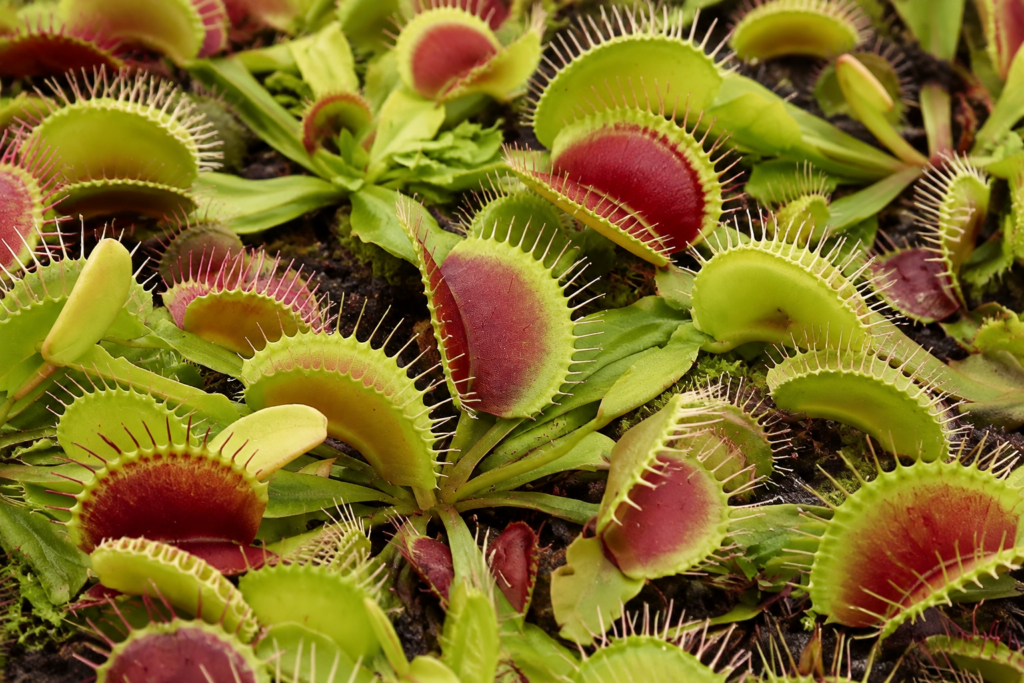
The Venus Flytrap is the most famous carnivorous plant in the world, but what makes it truly incredible is not simply its ability to catch insects it is how intelligent its hunting system appears. Inside each trap are tiny sensitive structures called trigger hairs, and when an insect lands, the plant does not immediately close. Closing requires enormous energy, and a single touch could be caused by rain, dust, or falling debris, so the Venus Flytrap waits. Only if the trigger hairs are touched multiple times within about twenty seconds does the plant recognize that something alive is moving and then the trap snaps shut in a fraction of a second.
Once trapped, the struggling insect touches more trigger hairs, confirming to the plant that it has caught real prey. The trap seals tighter, releases digestive enzymes, and over several days the insect is broken down and absorbed before the trap reopens for another hunt. The astonishing part is that the Venus Flytrap has no brain, no muscles, and no nervous system, yet it can sense movement, react in milliseconds, and make decisions based on energy costs. Even more surprising, as National Geographic notes, this legendary predator grows wild in only one small region of North and South Carolina in the United States a tiny corner of Earth that produced the most fascinating hunter in the plant kingdom.
Why Do These Plants Look So Strange?
The unusual appearance of these plants is not random every strange feature exists because of survival. Plants cannot run away from danger or chase after food, so they must adapt to their environment in creative ways instead. Some developed bright colors to attract pollinators, some created fake shapes to trick insects, some produce terrible smells to lure flies, and carnivorous species evolved hunting systems because they live in places where soil nutrients are severely limited. Millions of years of evolution created these incredible survival strategies, and the strange plants we see today are living examples of nature experimenting through time. If you enjoy stories like this, explore more hidden wonders of the natural world on our homepage, and watch the full video version on YouTube to see these plants in motion.
Frequently Asked Questions About the Strangest Plants on Earth
What is the strangest plant in the world?
There is no single answer because different plants are strange in different ways. The Venus Flytrap is often considered the strangest because it can actively capture and digest insects, Rafflesia arnoldii is famous for producing the largest individual flower on Earth, and Hydnora africana is remarkable because it spends most of its life completely hidden underground as a parasite.
What plant looks like human lips?
The Hooker’s Lips plant, scientifically known as Psychotria elata, is famous for its bright red, lip-shaped bracts. These modified leaves appear before the actual flowers bloom and help attract pollinators such as hummingbirds and butterflies in the dark tropical rainforests of Central and South America.
What is the largest flower in the world?
Rafflesia arnoldii produces the largest individual flower on Earth, with some blooms measuring more than three feet wide and weighing over 15 pounds. The flower grows as a parasite inside a host vine and blooms for only a few days after months of hidden development.
Are carnivorous plants dangerous to humans?
No, carnivorous plants are not dangerous to humans. Even the largest species, such as Nepenthes rajah, are designed to capture insects and occasionally very small animals. Their traps are far too small and too weak to harm a person, so they pose no threat beyond a mild pinch.
Why do some plants smell like dead animals?
Plants such as Rafflesia and the Titan Arum produce smells similar to rotting flesh because they rely on flies and carrion beetles for pollination. These insects are naturally attracted to decaying material, so the plants mimic that odor to lure them in a strategy known as carrion mimicry.
Final Thoughts
The natural world is full of hidden mysteries, and the plants on this list prove that evolution can create things that look almost impossible: a flower that resembles human lips, an orchid that tricks insects into romance, a plant that smells like death, a giant flower hidden inside another plant, and a predator that grows straight from the ground. These are not fictional creatures they are real examples of how creative and unpredictable nature can be. At The Hidden Secrets, we explore the mysteries of our planet that most people never notice and you can subscribe to our YouTube channel to see every discovery in full video. Because the more we learn about Earth, the more we realize one simple truth: reality is often stranger than fiction.