When the power goes out, the first thing you lose isn’t the lights. It’s the fridge, the Wi-Fi and your phone. A portable power station keeps those running, and it is quieter and safer indoors than a gas generator.
We looked at the 7 best-selling portable power stations on Amazon, ranks #1 to #7 in Amazon’s outdoor generators best sellers on October 8, 2026, from $62 to $999. Each pick has the real price and one honest catch the listing doesn’t shout about.
Disclosure: As an Amazon Associate we earn from qualifying purchases. Prices are what Amazon showed on October 8, 2026 and change often, so check today’s price before you buy. We haven’t tested these units ourselves; the facts come from the listings, the makers and independent reviews linked below.
Best portable power stations at a glance
| Power station | Price | Capacity | Output | Weight |
|---|---|---|---|---|
| MARBERO M82 | $62.66 | 88Wh | 80W | ~3 lb |
| BLUETTI Elite 30 V2 | $237.49 | 288Wh | 600W | 9.4 lb |
| Jackery Explorer 300 | $289.00 | 292Wh | 300W | 7.5 lb |
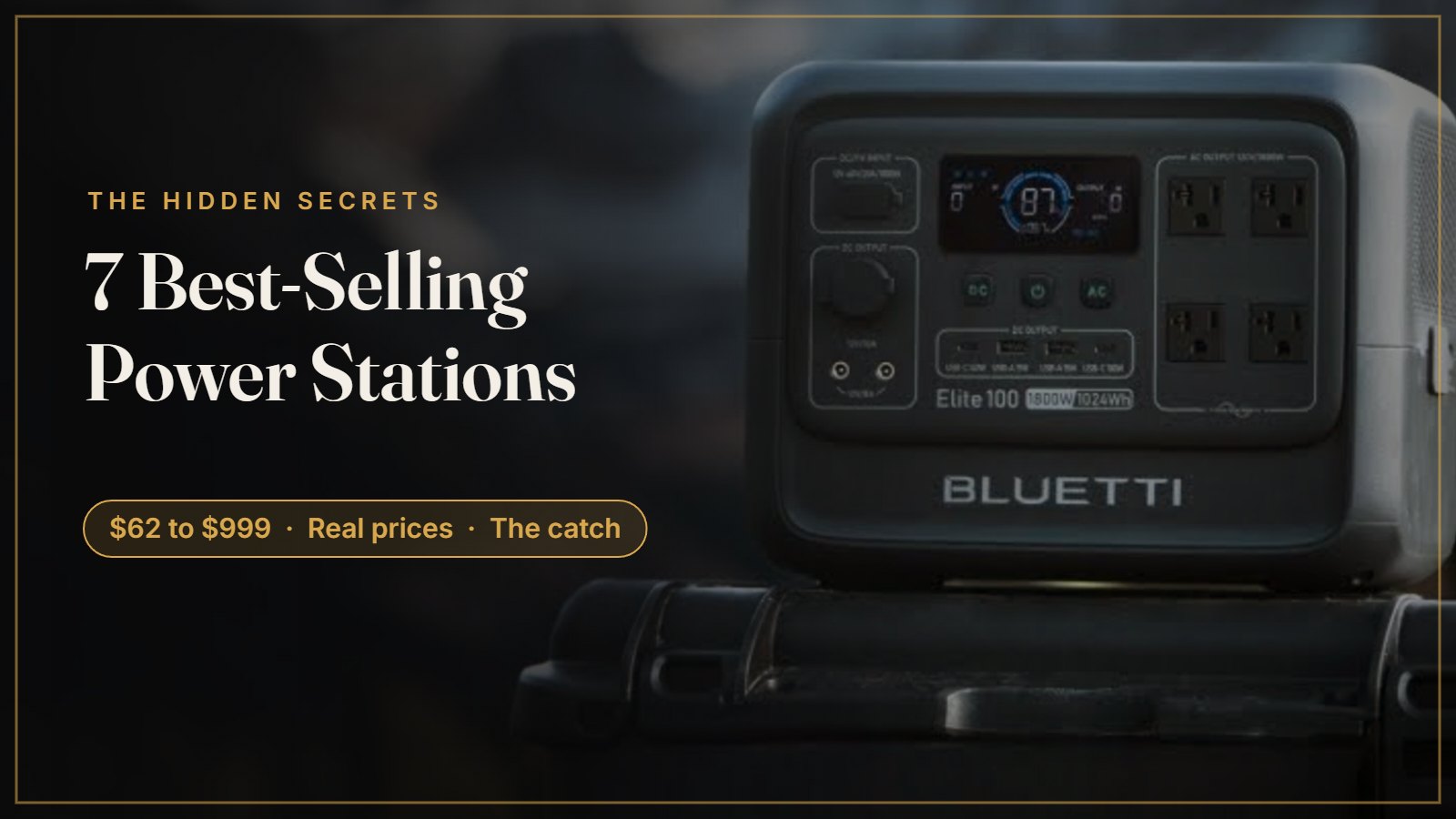
| BLUETTI Elite 100 V2 | $489.00 | 1,024Wh | 1,800W | 25.3 lb |
| EcoFlow DELTA 3 Classic | $524.95 | 1,024Wh | 1,800W | 26.7 lb |
| Jackery Explorer 1000 v2 | $559.00 | 1,070Wh | 1,500W | 23.8 lb |
| Anker SOLIX S2000 | $999.99 | 2,048Wh | 1,500W | 35.7 lb |
Our quick picks
- Best for camping and phones: MARBERO M82, $62.66
- Best small station for a router, laptop or CPAP: BLUETTI Elite 30 V2, $237.49
- Best value for power outages: BLUETTI Elite 100 V2, $489
- Fastest charging: EcoFlow DELTA 3 Classic, $524.95
- Lightest 1,000Wh station: Jackery Explorer 1000 v2, $559
- Best for long outages: Anker SOLIX S2000, $999.99
Watt-hours vs watts, in one line. Watt-hours (Wh) is the size of the tank. Watts (W) is how hard it can push. Almost every catch below comes back to one of these two numbers.
The 7 best-selling power stations on Amazon
1. MARBERO M82 (88Wh) $62.66
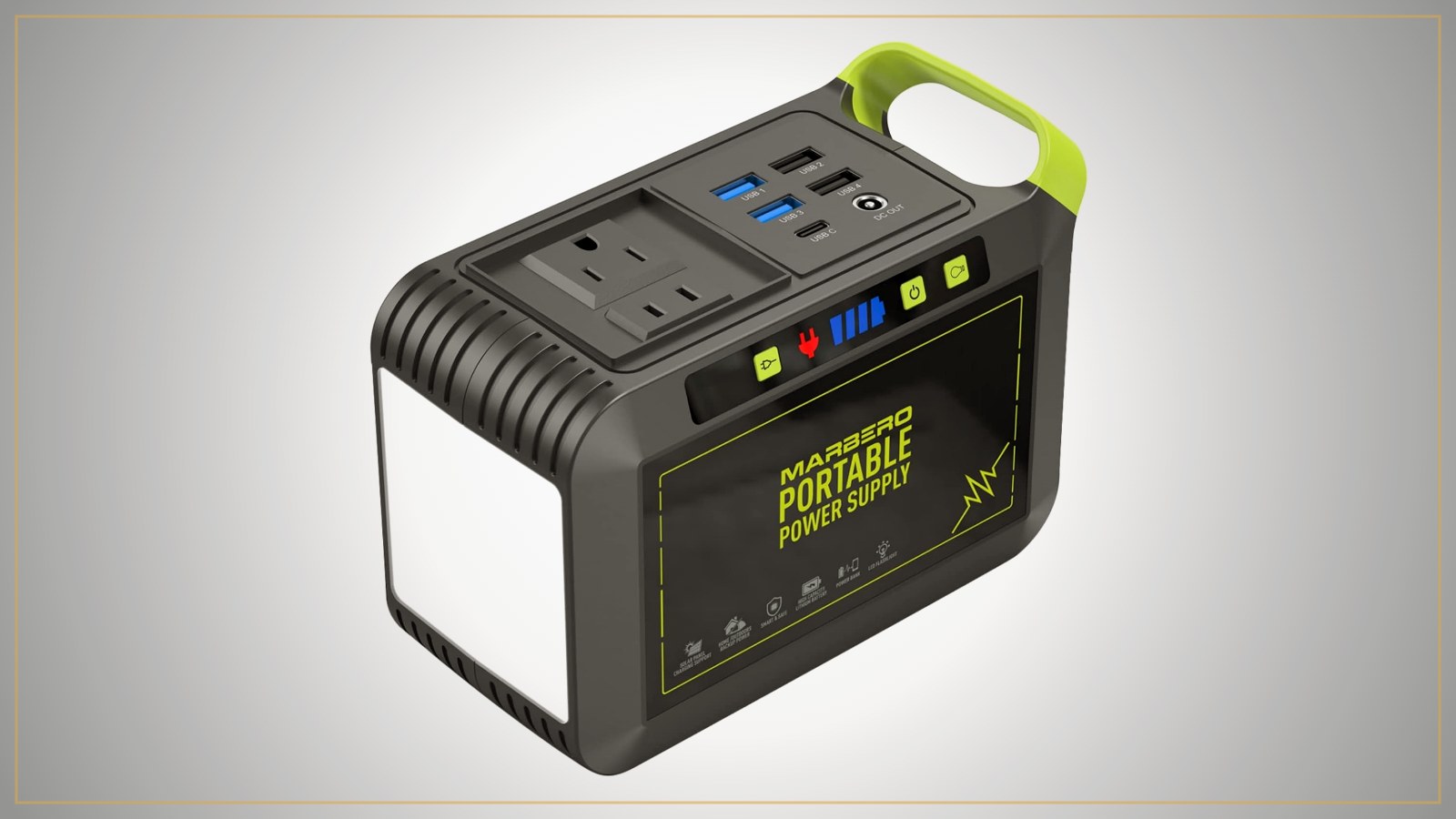
About the size of a DSLR camera and around 3 pounds, the M82 is the cheapest way into a power station. It holds 88 watt-hours, but it is packed with ports: two AC outlets, USB, a 12V car socket and a flashlight with three brightness levels.
It charges to 80% from the wall in about two hours, and you can charge your devices from it at the same time. It even comes with a cable for a 12V car fridge, but with 88Wh, expect an hour or two at most. It has more than 9,000 Amazon ratings.
- 88Wh capacity, 80W output (120W surge)
- 2 AC outlets, USB ports and a 12V car socket
- Built-in flashlight with three modes
- About 2 hours to 80% from the wall
The catch: It has a hard 80W limit. In one hands-on review it shut off as soon as it was asked to run a 150W appliance, so no coffee maker, microwave or space heater. Even at a full 80W, the battery is empty in about an hour. Think of it as a big power bank with a plug, not home backup.
Best for: Phones, a laptop, a small fan or string lights at a campsite.
2. BLUETTI Elite 30 V2 (288Wh, 600W) $237.49
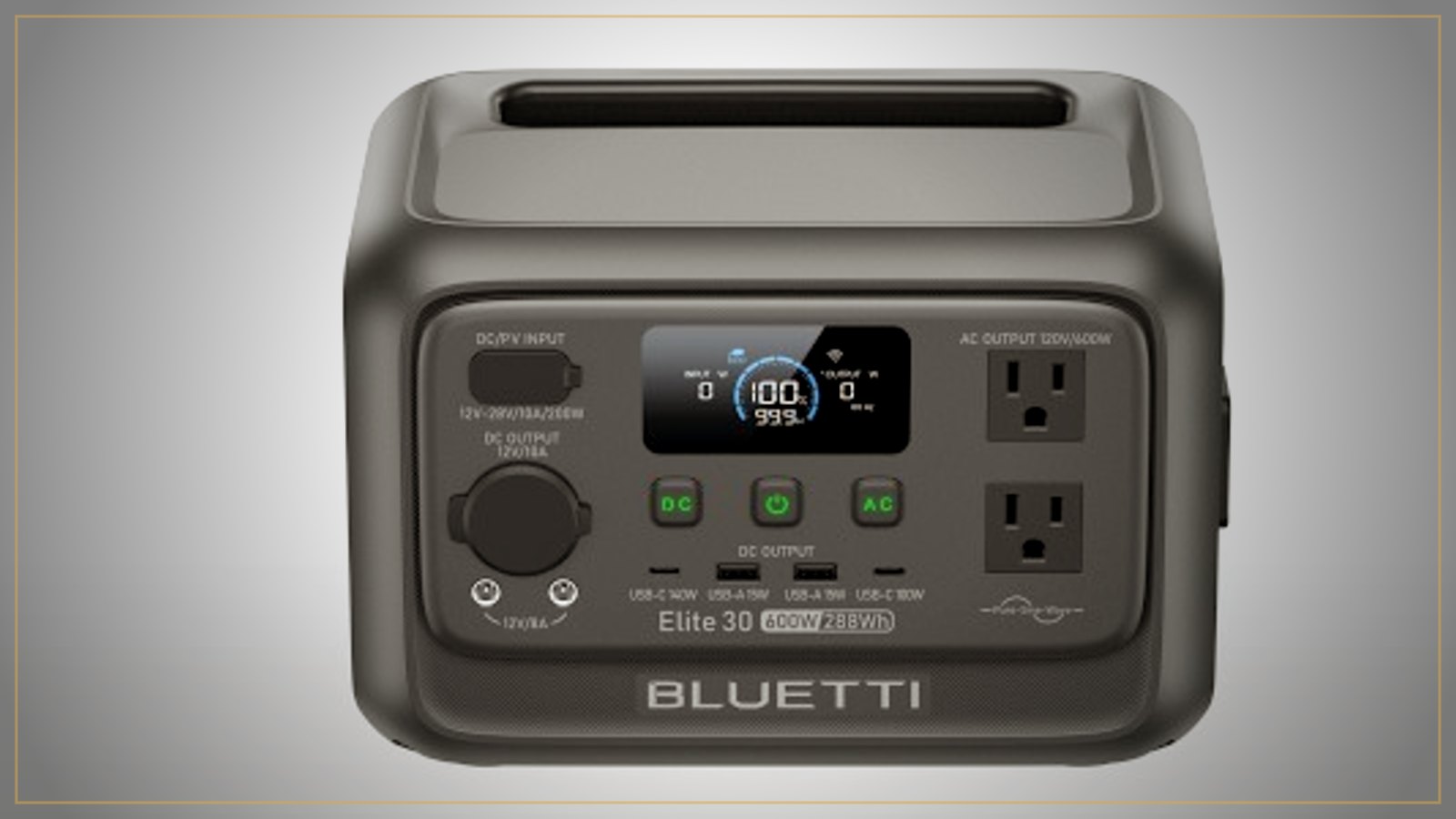
A big step up for not much more money. The Elite 30 V2 weighs about 9.4 pounds and holds 288 watt-hours, more than three times the Marbero, with 600W of output and a long-life lithium iron phosphate (LFP) battery.
It charges from the wall to 80% in about 45 minutes and to full in about 70. It also works as a backup for your router or laptop: BLUETTI says it switches to battery in about 10 milliseconds when the power cuts out.
- 288Wh LFP battery, 600W output (Power Lifting up to 1,500W)
- 0 to 80% in about 45 minutes
- About 10 ms switchover for UPS-style backup
- 9.4 lb
The catch: The 1,500W “Power Lifting” works by lowering the voltage, so a 1,500W device only gets about 600W. In T3’s review, a heater on high kept running but its fan slowed to almost nothing. And 288Wh at 600W lasts roughly half an hour.
Best for: A router, a laptop, or a CPAP machine for a night of camping.
3. Jackery Explorer 300 (292Wh, 300W) $289.00
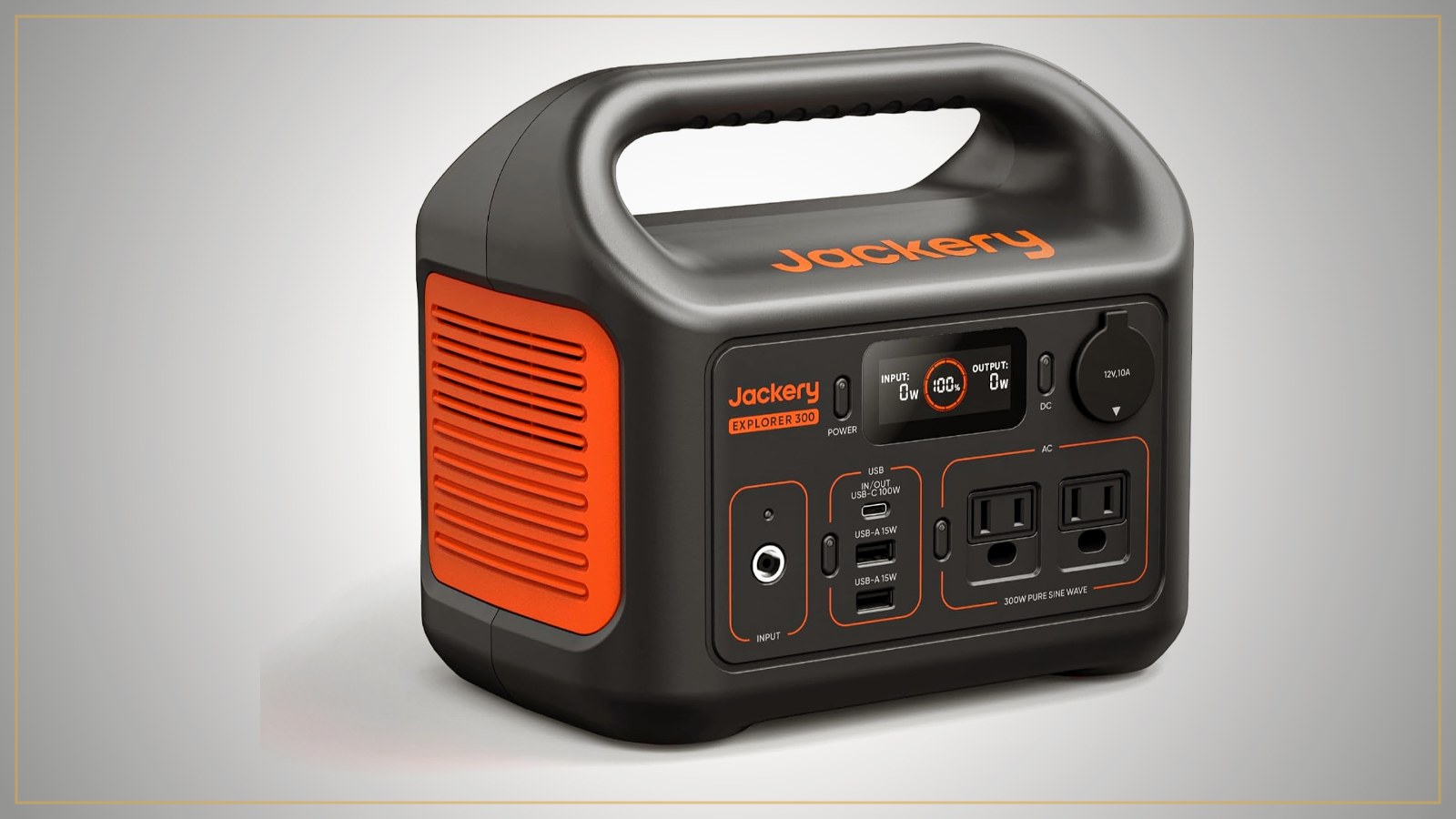
A best seller for years, with more than 11,000 ratings. It weighs 7.5 pounds with the handle built into the top and holds 292 watt-hours, which Jackery says is about 13 phone charges or three and a half laptop charges.
It has a 100W USB-C port, two AC outlets, a car port and an LFP battery rated for more than 4,000 cycles. With one of Jackery’s own 100W solar panels, the listing says it reaches 80% in about 2.8 hours.
- 292Wh LFP battery, 300W output (600W surge)
- 100W USB-C, 2 AC outlets, car port
- 4,000+ cycle rating
- 7.5 lb
The catch: It holds almost exactly the same energy as the BLUETTI Elite 30 V2, but puts out half the power (300W vs 600W). Its listed wall charge is about four hours, against about 70 minutes for the BLUETTI, and it cost about $50 more when we checked. You are paying for the track record, not more power.
Best for: Buyers who want a long track record and a 100W USB-C port in a small box.
4. BLUETTI Elite 100 V2 (1,024Wh, 1,800W) $489.00
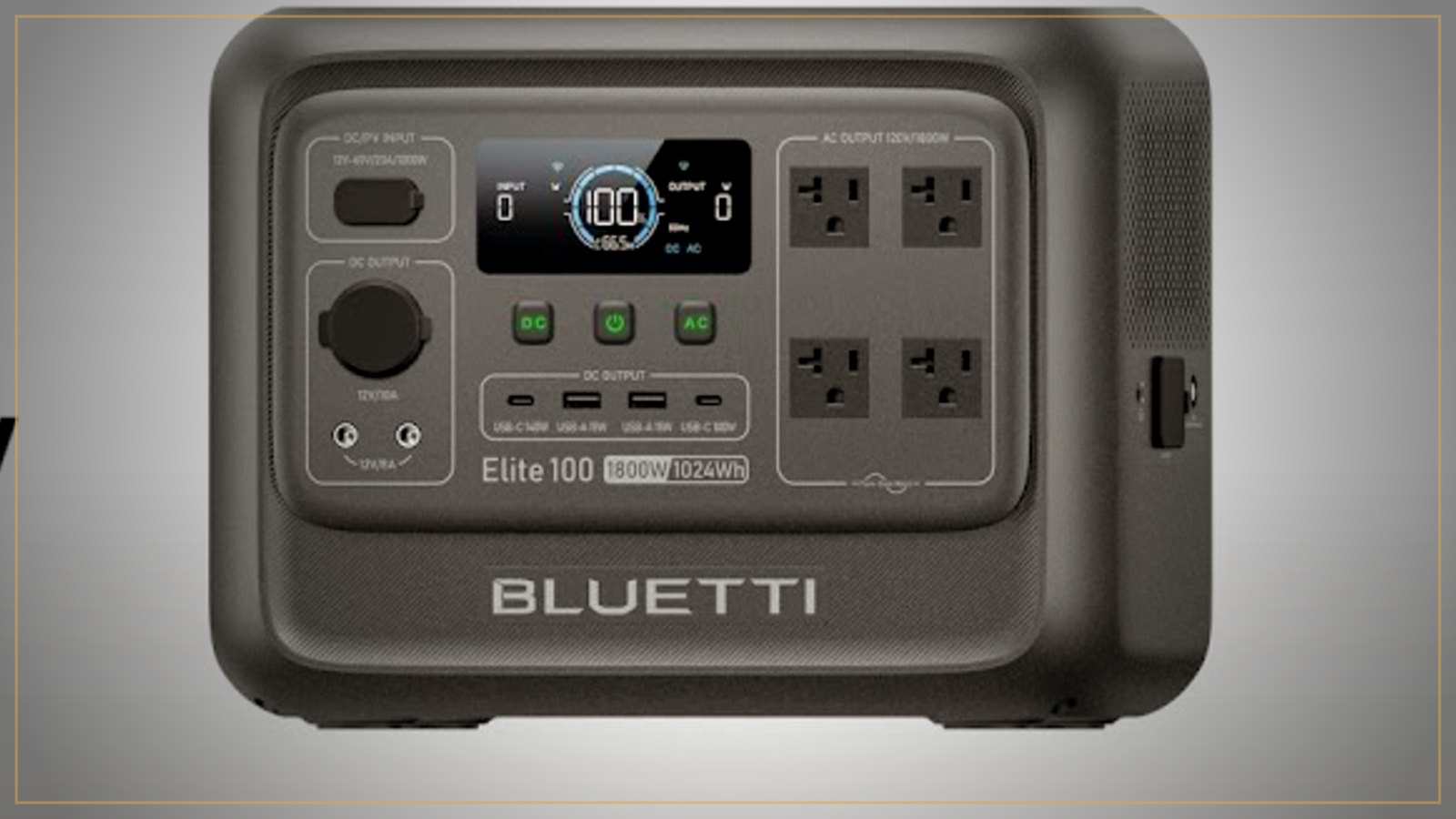
This is the size most people actually need for a power outage. It holds 1,024 watt-hours and puts out 1,800W, enough for a fridge, a microwave or a coffee maker, and it was the cheapest of the three 1,000Wh stations here.
It has 11 ports in total, including four AC outlets and a 12V car socket, weighs about 25 pounds and can be controlled from the app over Wi-Fi or Bluetooth. BLUETTI claims 80% in about 45 minutes and a 30 dB silent mode.
- 1,024Wh LFP battery, 1,800W output (2,700W Power Lifting)
- 11 ports including 4 AC outlets and a 12V socket
- Wi-Fi and Bluetooth app control
- 25.3 lb
The catch: Both headline claims have conditions. The Solar Lab found fast charging only kicks in above 20% (around 500W below that), and a full charge took about 1 hour 40 minutes. Notebookcheck notes that silent mode limits output to 600W. It cannot be fast and silent at the same time.
Best for: Power outages on a budget: a fridge, a microwave or a coffee maker.
5. EcoFlow DELTA 3 Classic (1,024Wh, 1,800W) $524.95
On paper it matches the BLUETTI exactly: 1,024Wh and 1,800W. The difference is charging. EcoFlow claims 80% in 45 minutes, and The Solar Lab measured a full charge in just under an hour.
It switches to battery in under 10 milliseconds, weighs about 27 pounds, and the app adds charging schedules and a Storm Alert mode. With a 500W solar panel, EcoFlow says it recharges in about two and a half hours. “Smart Generator ready” simply means you can plug an inverter gas generator into the charging port.
- 1,024Wh LFP battery, 1,800W output (3,600W surge)
- Full wall charge in just under an hour in testing
- Under 10 ms switchover
- 26.7 lb
The catch: It is not expandable: its own listing says it doesn’t work with EcoFlow’s extra battery packs, so 1,024Wh is all it will ever hold. There are only three AC outlets, The Solar Lab found one isn’t grounded, and there is no 12V car socket.
Best for: Anyone who wants the fastest real-world recharge between outages.
6. Jackery Explorer 1000 v2 (1,070Wh, 1,500W) $559.00

This was the number one best seller in Amazon’s outdoor generators category when we checked. It holds 1,070 watt-hours and puts out 1,500W, and at just under 24 pounds it is the lightest of the three 1,000Wh stations.
It has three AC outlets, two USB-C ports and an LFP battery rated for about ten years, plus a quiet charging mode in the app rated at about 30 dB. It had around 3,600 ratings averaging 4.7 stars.
- 1,070Wh LFP battery, 1,500W output (3,000W surge)
- 3 AC outlets, 2 USB-C ports
- One-hour charge with emergency mode
- 23.8 lb
The catch: The headline one-hour charge needs emergency charging switched on in the app before every charge. Otherwise it takes about 1.7 hours to protect the battery. The listing also says it only works with Jackery’s own solar panels, so factor that in if you already own panels from another brand.
Best for: Camping and road trips where weight matters, plus home backup.
7. Anker SOLIX S2000 (2,048Wh, 1,500W) $999.99
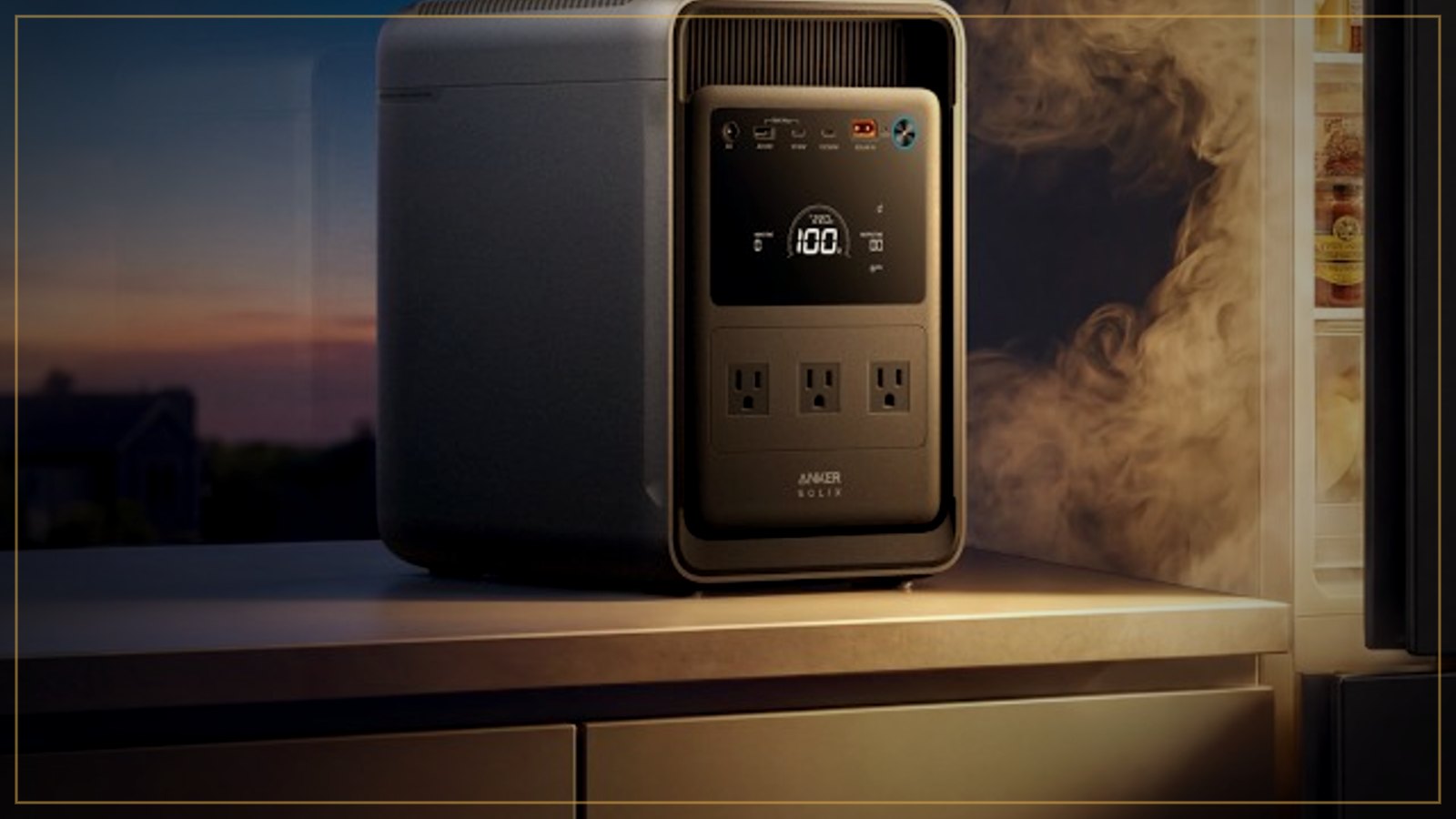
The big one. It holds 2,048 watt-hours, about double the 1,000Wh stations, and Anker says it can keep a fridge running for up to 35 hours. It has five AC outlets, and this listing includes a surge-protected power strip.
In The Solar Lab’s test it charged fully from the wall in about 1 hour 47 minutes, with 91% efficiency, which is very high. Anker also claims its OptiSave tech runs 20% longer than other 2kWh stations; that is the maker’s own claim.
- 2,048Wh LFP battery, 1,500W output (3,000W peak)
- 5 AC outlets plus a surge-protected power strip
- 10,000-cycle rating
- 35.7 lb
The catch: The 10,000 cycles are counted down to 60% of original capacity, while many listings count to 70 or 80%, so it isn’t a fair comparison. It has double the battery, not double the power: 1,500W, the same as the Jackery 1000 v2 at about half the price. It also weighs about 36 pounds with no built-in handles and no 12V socket.
Best for: Keeping a fridge and essentials running through a long outage at home.
The three 1,000Wh stations side by side
| BLUETTI Elite 100 V2 | EcoFlow DELTA 3 Classic | Jackery Explorer 1000 v2 | |
|---|---|---|---|
| Price | $489 | $524.95 | $559 |
| Capacity | 1,024Wh | 1,024Wh | 1,070Wh |
| Output | 1,800W | 1,800W | 1,500W |
| Weight | 25.3 lb | 26.7 lb | 23.8 lb |
| AC outlets | 4 | 3 | 3 |
| 12V car socket | Yes | No | Yes |
| Stands out for | Lowest price, most outlets | Fastest charge in testing | Lightest |
What will a power station actually run?
Here is the quick way to work it out yourself: take the watt-hours, knock off about 15% for losses (independent tests measured 80 to 91% efficiency on these models), then divide by how many watts your device uses.
Runtime (hours) ≈ Wh × 0.85 ÷ device watts
| Device (approx. draw) | 88Wh MARBERO | ~290Wh BLUETTI 30 / Jackery 300 | ~1,000Wh stations | 2,048Wh Anker |
|---|---|---|---|---|
| Wi-Fi router (10W) | ~7 hr | ~24 hr | ~87 hr | ~174 hr |
| CPAP, no humidifier (40W) | ~2 hr | ~6 hr | ~22 hr | ~43 hr |
| Laptop (60W) | ~1 hr (limit 80W) | ~4 hr | ~14 hr | ~29 hr |
Fridges are harder because they cycle on and off. Find the yellow EnergyGuide label, divide the yearly kWh by 365, and that’s roughly what your fridge uses per day. If it’s under 1kWh, a 1,000Wh station can keep it cold for most of a day. If it’s well over, look at the Anker, or add a solar panel to keep topping it up.
The hidden costs nobody mentions
- None of these come with a solar panel. Panels are extra for every station here.
- The Jackery Explorer 1000 v2 only works with Jackery’s own panels, so you can’t shop around.
- On the BLUETTI Elite 100 V2, the fastest car charging needs BLUETTI’s Charger 1, sold separately.
- The EcoFlow DELTA 3 Classic and Anker SOLIX S2000 have no 12V car socket. If you run a car fridge from that plug, you will need another way to power it.
Which power station should you buy?
- Camping and charging phones: the MARBERO M82 is enough.
- A laptop, router or CPAP: the BLUETTI Elite 30 V2, or the Jackery Explorer 300 if you prefer the longer track record.
- A fridge and a microwave: any of the 1,000Wh stations. BLUETTI if price matters most, EcoFlow for the fastest charge, Jackery for the lightest.
- Keeping a fridge going through a long outage: the Anker SOLIX S2000.
Frequently asked questions
What is the best portable power station for home backup?
For most homes, a 1,000Wh station with at least 1,500W output is the sweet spot. The BLUETTI Elite 100 V2 ($489) is the best value, the EcoFlow DELTA 3 Classic ($524.95) charges fastest, and the Anker SOLIX S2000 ($999.99) lasts longest with 2,048Wh.
What size power station do I need to run a fridge?
Check the yearly kWh on your fridge’s EnergyGuide label and divide by 365. Most fridges use around 1 to 2kWh a day, so a 1,000Wh station covers most of a day and a 2,000Wh station like the Anker SOLIX S2000 covers more.
How long will a power station run a CPAP?
A CPAP without the heated humidifier draws roughly 30 to 60W. At 40W, a ~290Wh station runs about 6 hours (one night), a 1,000Wh station about 22 hours and a 2,048Wh station about 43 hours.
Is a power station the same as a solar generator?
A “solar generator” is usually a power station sold with solar panels. None of the seven here include panels, so budget extra if you want solar charging.
What is an LFP battery?
Lithium iron phosphate (LFP or LiFePO4) batteries last thousands of charge cycles and are more stable than older lithium-ion types. Six of the seven here use LFP; the MARBERO listing does not say.
Can a power station run a microwave?
Only if its output beats the microwave’s draw, usually 1,000 to 1,500W. The 1,000Wh stations here (1,500 to 1,800W) can; the MARBERO (80W), Jackery 300 (300W) and BLUETTI Elite 30 V2 (600W) cannot run one properly.
Watch us break these down on YouTube. We cover car gadgets, camping tech and new vehicles on The Hidden Secrets channel, always with the real price and the catch.
Sources
- Amazon Best Sellers: outdoor generators (ranks, prices, ratings, specs)
- BatterySkills: MARBERO M82 review
- T3: BLUETTI Elite 30 V2 review
- The Solar Lab: BLUETTI Elite 100 V2 review
- Notebookcheck: BLUETTI Elite 100 V2 review
- The Solar Lab: EcoFlow DELTA 3 Classic review
- The Solar Lab: Anker SOLIX S2000 review
Images are stills from each brand’s official videos and Amazon listings.