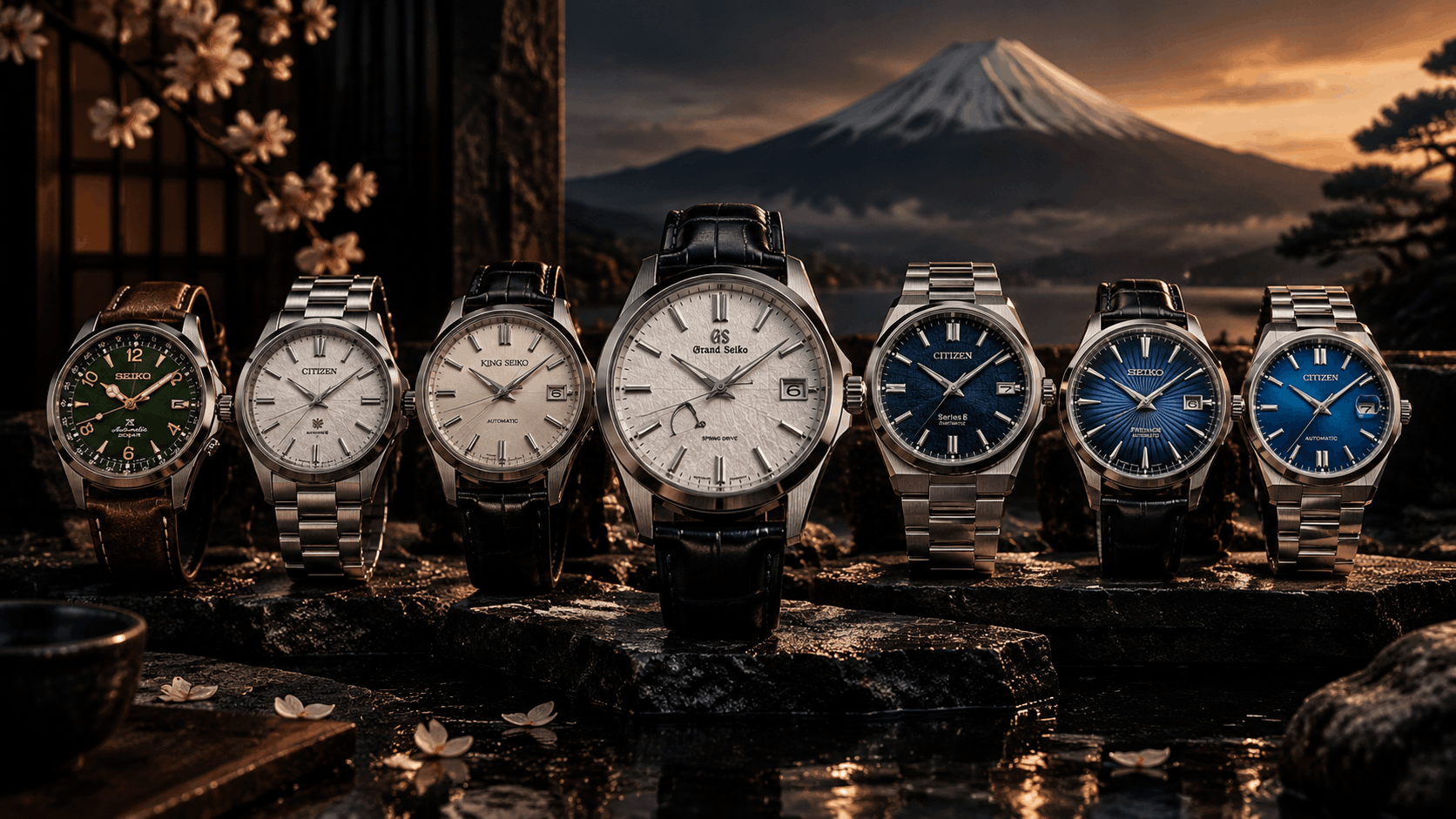
Switzerland wants you to believe that serious watchmaking starts at five thousand dollars. Japan has spent decades proving otherwise. Collectors in Tokyo, London, and Singapore already know it, while many American buyers still walk past these watches to overpay for a Swiss logo. This guide covers the seven best Japanese watches on the market today, from a 350 dollar automatic to a hand finished masterpiece, with verified current prices for every model.
Best Japanese Watches: Quick Comparison Table
| Rank | Watch | Price Range | Best For |
|---|---|---|---|
| 1 | Grand Seiko Snowflake SBGA211 | $6,500 retail / ~$4,600 used | Best overall |
| 2 | The Citizen Chronomaster | $2,000 to $2,600 | Best accuracy |
| 3 | King Seiko | $1,600 to $1,800 | Best heritage story |
| 4 | Seiko Prospex Alpinist SPB507 | $750 to $850 | Best under $1,000 |
| 5 | Citizen Series 8 | $550 to $800 street | Best luxury look for the money |
| 6 | Seiko Presage Cocktail Time SRPB41 | $450 to $525 | Best dial under $1,000 |
| 7 | Citizen Tsuyosa | $350 to $475 | Best budget automatic |
1. Grand Seiko Snowflake SBGA211: The Best Japanese Watch Overall
The dial of the Snowflake is textured after windswept snow near the Grand Seiko studio in the Japanese mountains, and collectors seriously argue it is the most beautiful dial in the world at any price. The case is titanium, feather light and polished by hand using the Zaratsu technique into distortion free mirrors. The second hand does not tick. It glides in one smooth sweep thanks to Spring Drive, a movement that exists nowhere else in watchmaking. It pairs a mechanical mainspring with electronic regulation for accuracy of about one second per day and a 72 hour power reserve.
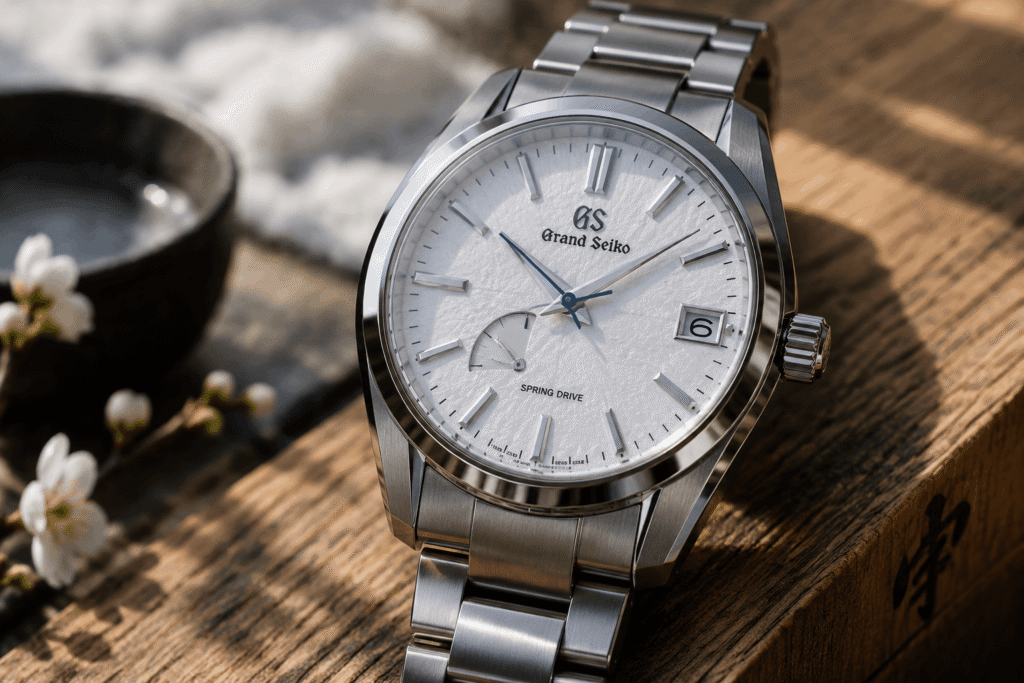
Retail sits around 6,500 dollars, and this is where the hidden opportunity appears. Used Snowflakes in excellent condition trade around 4,600 dollars, roughly a third below retail, according to market data from WatchCharts. The same market that pushes Swiss steel sports watches above sticker price quietly discounts one of the finest watches ever made.
2. The Citizen Chronomaster: Tohe Most Accurate Watch Most People Can Buy
Five seconds per year. Not per day, per year. That is the guaranteed accuracy of The Citizen Chronomaster, powered by light through Eco Drive technology, which means no battery changes and no winding. A Rolex chronometer is permitted to drift about two seconds every day. This watch is barely permitted two seconds by summer.
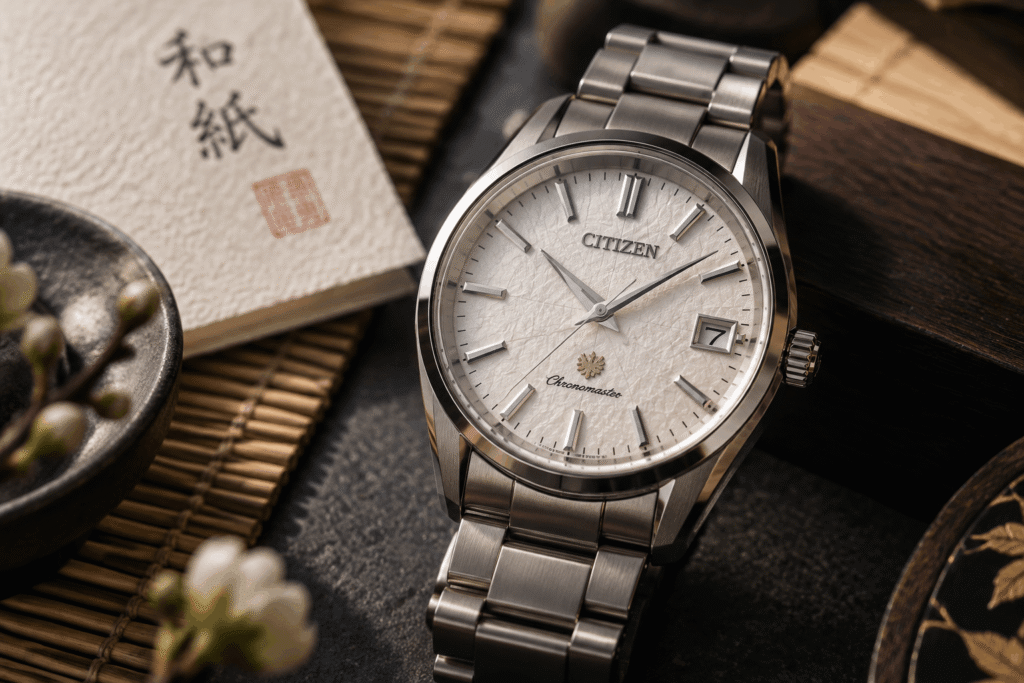
The signature models use genuine washi, traditional Japanese paper, layered beneath the dial surface for a soft snowy texture that printing cannot imitate. Prices run from about 2,000 to 2,600 dollars depending on the reference. In Japan, The Citizen is the brand’s crown jewel. In America, it may be the most unknown great watch on sale today.
3. King Seiko: The Brand That Came Back From the Dead
In the 1960s, Seiko ran two rival workshops against each other. Grand Seiko and King Seiko both built the finest mechanical watches Japan could produce, each chasing the other’s accuracy records. When the quartz revolution arrived, King Seiko was discontinued entirely, and for fifty years it existed only as a collector legend.
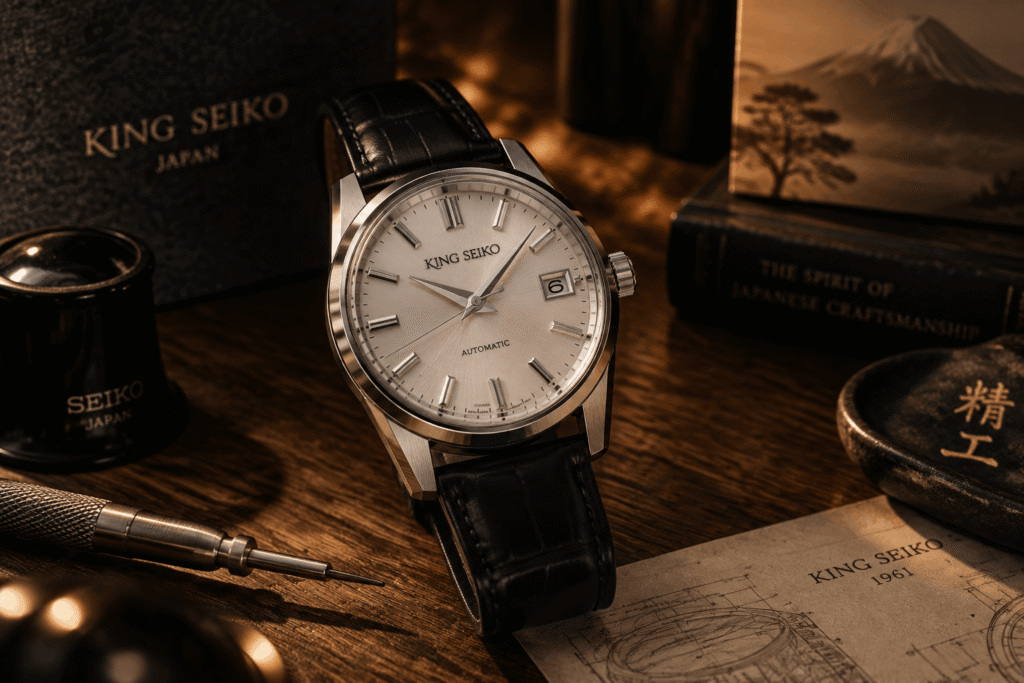
The modern King Seiko line brings back the original razor sharp case geometry, with flat mirror polished surfaces and knife edge angles, in a 37 millimeter case running a modern automatic movement with about 70 hours of power reserve. Expect to pay roughly 1,600 to 1,800 dollars for the middle chapter of Japanese watchmaking history, reborn.
4. Seiko Prospex Alpinist SPB507: The Best Japanese Watch Under $1,000
Seiko built the first Alpinist for Japanese mountain climbers in 1959, and the newest generation is the best yet. Reference SPB507 carries sapphire crystal front and back, a scratch resistant Diashield coating, 200 meters of water resistance, and the upgraded 6R55 movement with a 72 hour power reserve, in a 39.5 millimeter case that is now half a millimeter thinner than before.
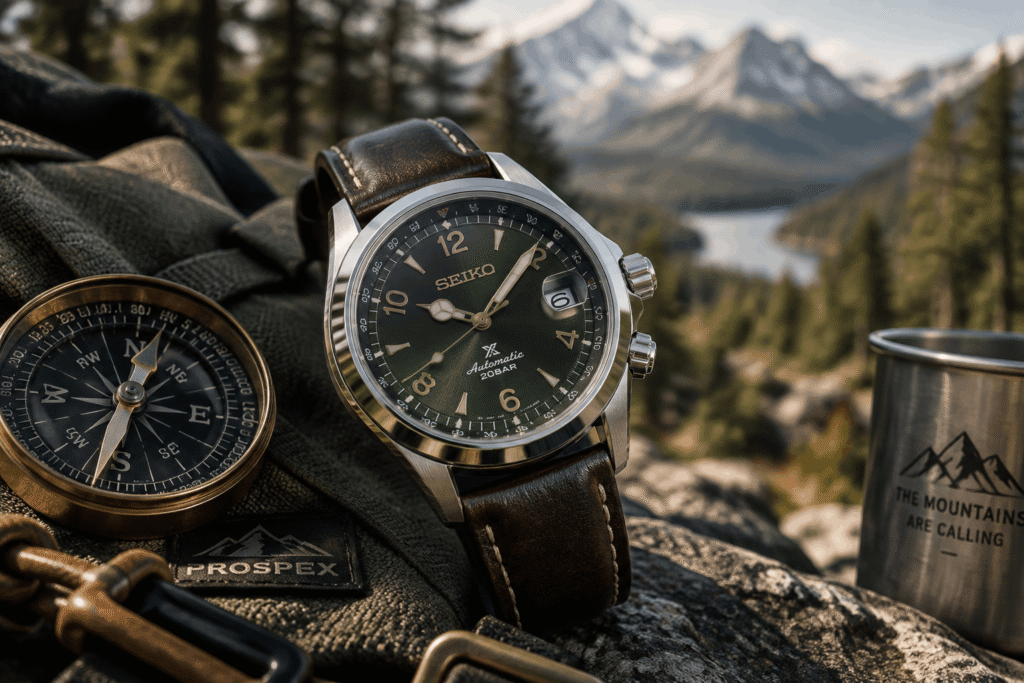
The signature forest green dial, gold indices, cathedral hands, and the internal compass ring operated by a second crown all remain. At roughly 750 to 850 dollars, the Alpinist outguns Swiss field watches at double the price.
5. Citizen Series 8: Luxury Sports Watch Design at a Fraction of the Price
The Series 8 is what happens when Citizen aims a premium automatic directly at the luxury sports watch category. A sharp 40 millimeter case with an integrated bracelet, sapphire crystal, enhanced magnetic resistance, and a layered dial with applied indices, all around ten millimeters thin with a 42 hour power reserve.
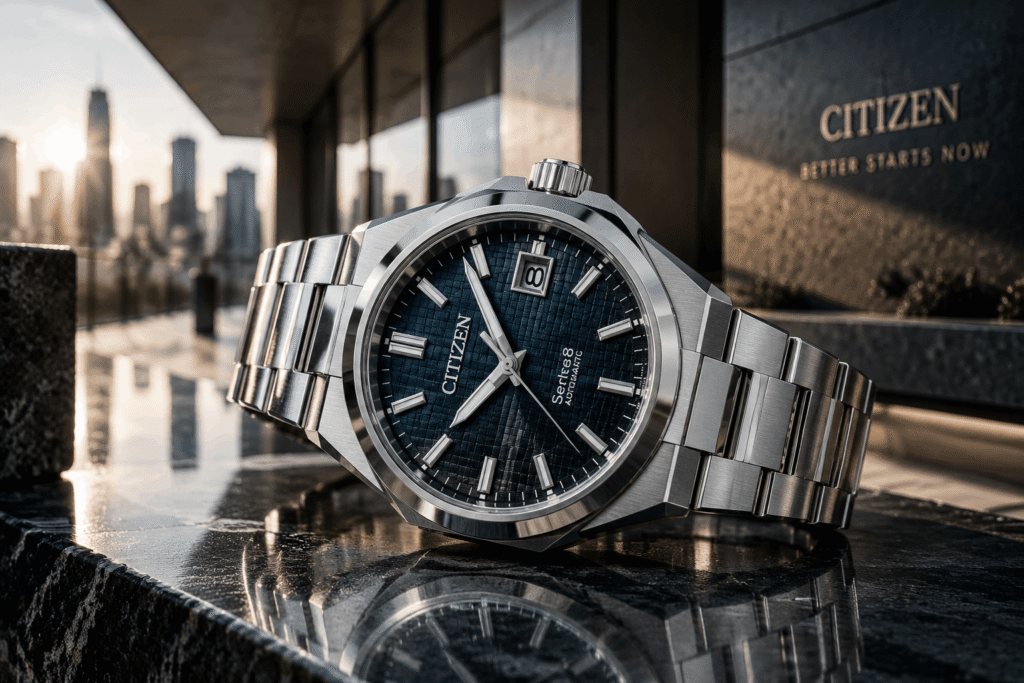
List price sits near 1,000 dollars, but street prices commonly run 550 to 800, which makes the Series 8 one of the most underrated Japanese watches in America. The finishing conversation it starts is usually reserved for Swiss pieces at two thousand dollars and up.
6. Seiko Presage Cocktail Time SRPB41: The Most Beautiful Dial Under $1,000
The Cocktail Time is the watch that converts people into watch collectors. The reference SRPB41, known as the Blue Moon, carries a pressed lacquered sunburst dial inspired by Japanese cocktail culture that shifts from ice blue to deep navy as it moves through light. Inside runs the Seiko 4R35 automatic with hand winding and hacking seconds and about 41 hours of reserve, in a 40.5 millimeter case with brushed and polished finishing well above its price.
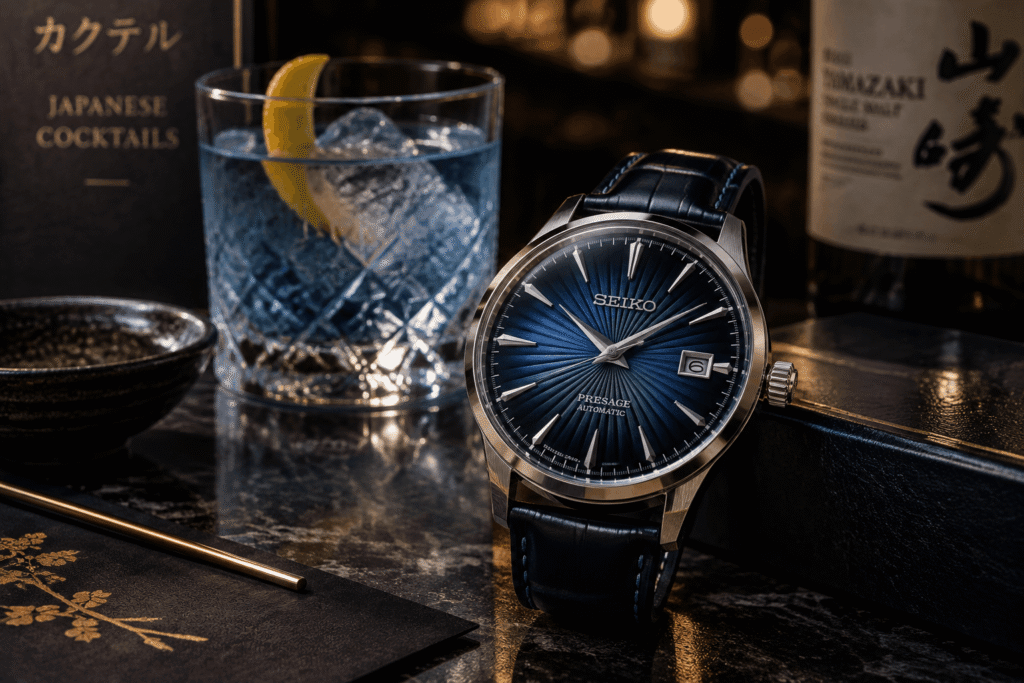
Two honest limits apply. The crystal is Hardlex rather than sapphire, and 50 meter water resistance makes it a dress watch rather than a daily beater. At 450 to 525 dollars, no Swiss dress watch at four times the money wins this comparison.
7. Citizen Tsuyosa: The Best Budget Automatic Watch
The Tsuyosa became an internet favorite for one reason. It delivers the integrated bracelet luxury sports watch look for around 350 to 475 dollars. The 40 millimeter case suits almost any wrist, the sunray dial catches light like far more expensive watches, and a genuine Citizen automatic movement with roughly 40 hours of reserve sits behind a display caseback.
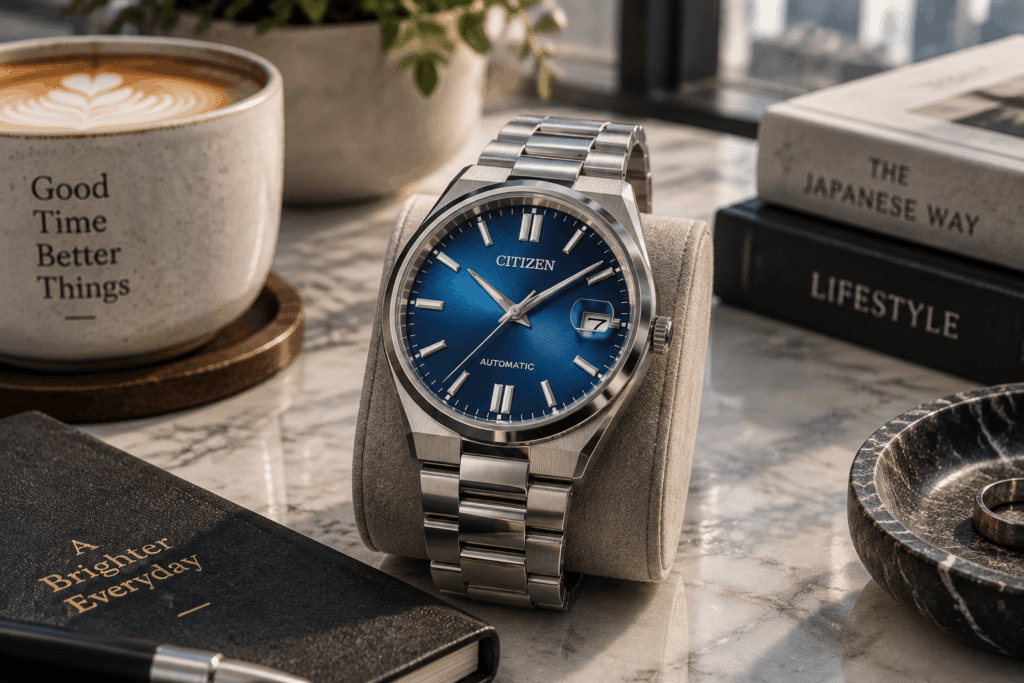
The single compromise is 50 meter water resistance, so keep it away from swimming. For a first automatic watch or an affordable second piece, nothing else at this price is this convincing.
Quick answer: The best Japanese watch overall is the Grand Seiko Snowflake SBGA211, a titanium Spring Drive watch accurate to about one second per day, with retail around 6,500 dollars and used examples trading near 4,600. The best Japanese watch under 1,000 dollars is the Seiko Prospex Alpinist, and the best budget pick is the Citizen Tsuyosa at roughly 350 to 475 dollars.
Are Japanese Watches Better Value Than Swiss Watches?
At most price points below 10,000 dollars, Japanese watches deliver more verifiable quality per dollar than their Swiss rivals. Japan charges for the watch, not the myth. A Grand Seiko offers hand finishing and movement technology that Swiss brands price two to three times higher, while entry level Seiko and Citizen models include features such as sapphire crystals, in house movements, and long power reserves that Swiss watches under 1,000 dollars often omit. Swiss brands retain the advantage in brand recognition and, for a small number of steel sports models, in resale value. For readers weighing value the way we do across every luxury category, our guide to the best private jets under 10 million dollars applies the same lesson to aviation.
Frequently Asked Questions
What is the best Japanese watch brand? Grand Seiko leads for pure watchmaking, Seiko dominates value below 1,000 dollars, and Citizen owns the technology story with Eco Drive and the ultra accurate Chronomaster line.
Is Grand Seiko better than Rolex? They excel at different things. Grand Seiko wins on dial finishing, movement innovation, and accuracy, with Spring Drive holding about one second per day against roughly two seconds per day for a Rolex chronometer. Rolex wins on brand recognition and resale value.
What is the most accurate Japanese watch? The Citizen Chronomaster, guaranteed to about five seconds per year, is the most accurate analog watch generally available to buy.
Are Seiko and Citizen luxury brands? Their core lines are value brands, but both build genuine luxury watches. Grand Seiko and King Seiko sit above Seiko, while The Citizen and the Series 8 line sit above the familiar Citizen range.
Do Japanese watches hold their value? Most depreciate on the used market, like nearly all watches outside a handful of Swiss steel sports models. The Grand Seiko Snowflake trading about a third below retail is the clearest example, and for buyers that gap is an opportunity rather than a flaw.